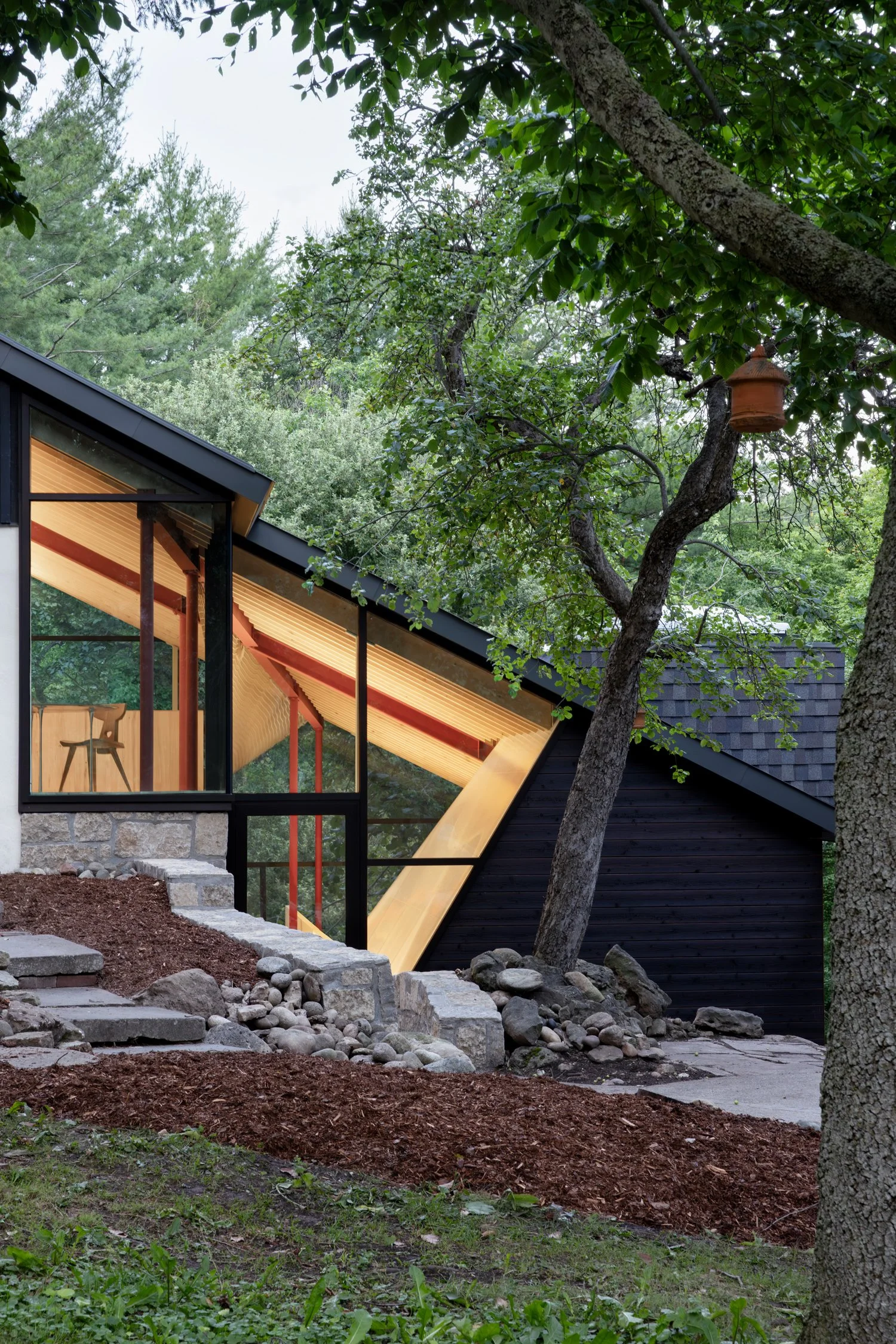
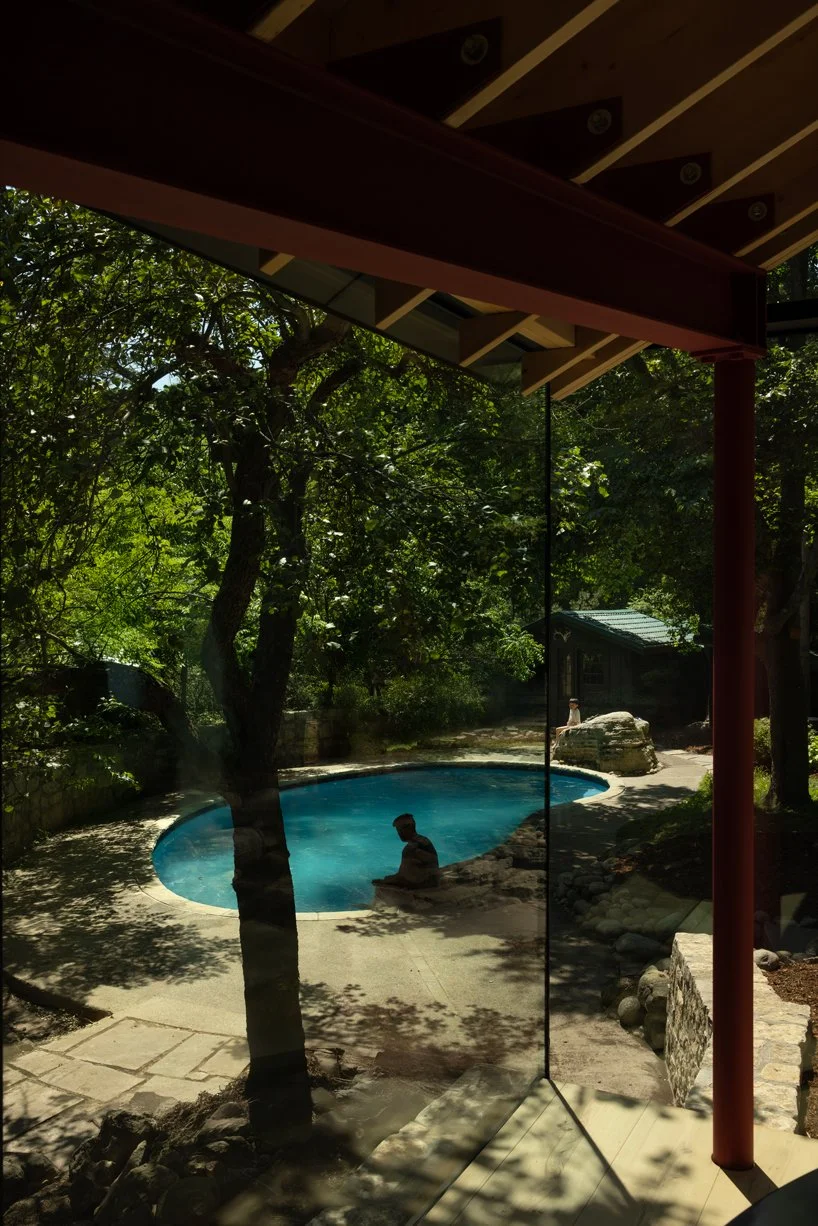
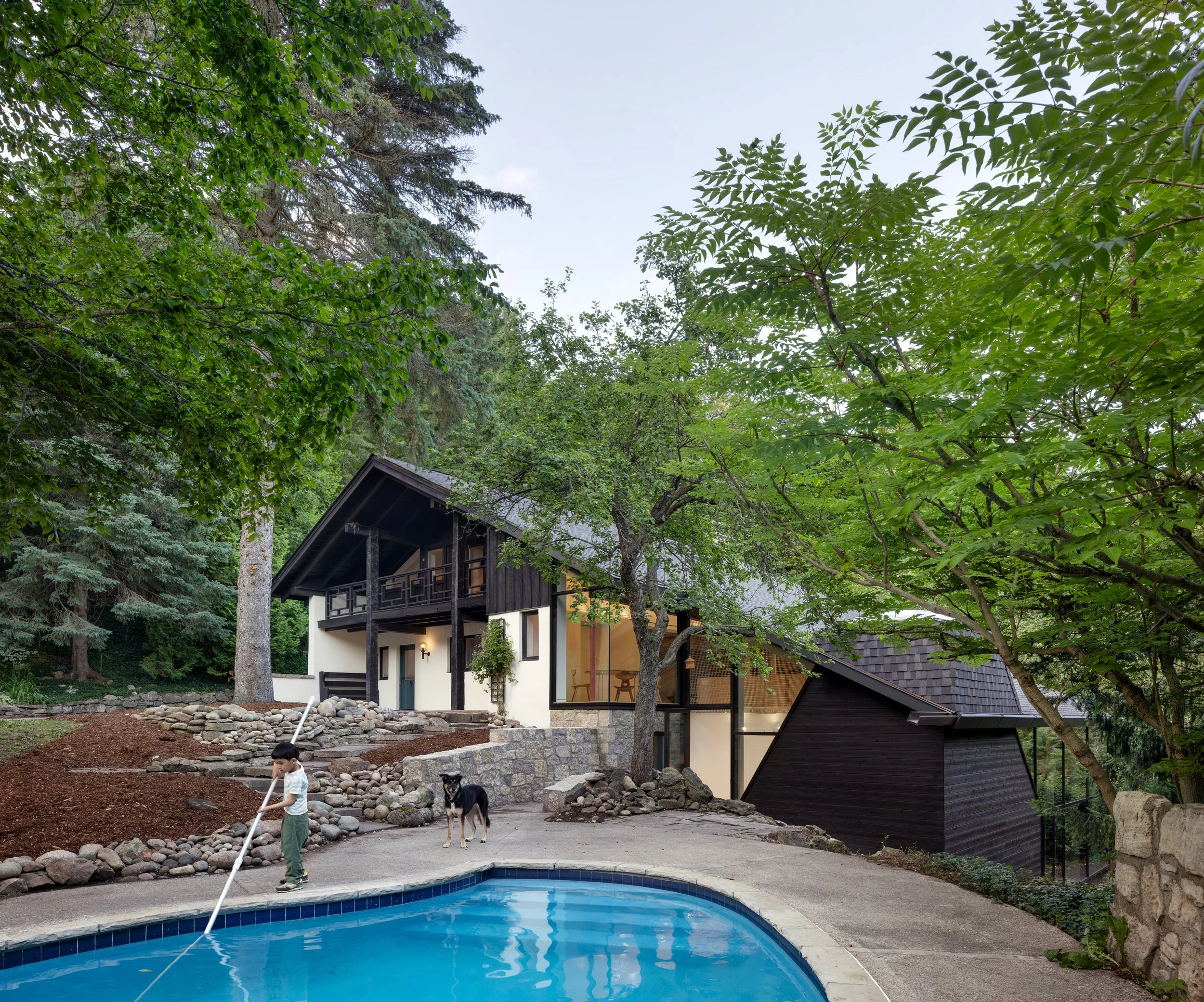
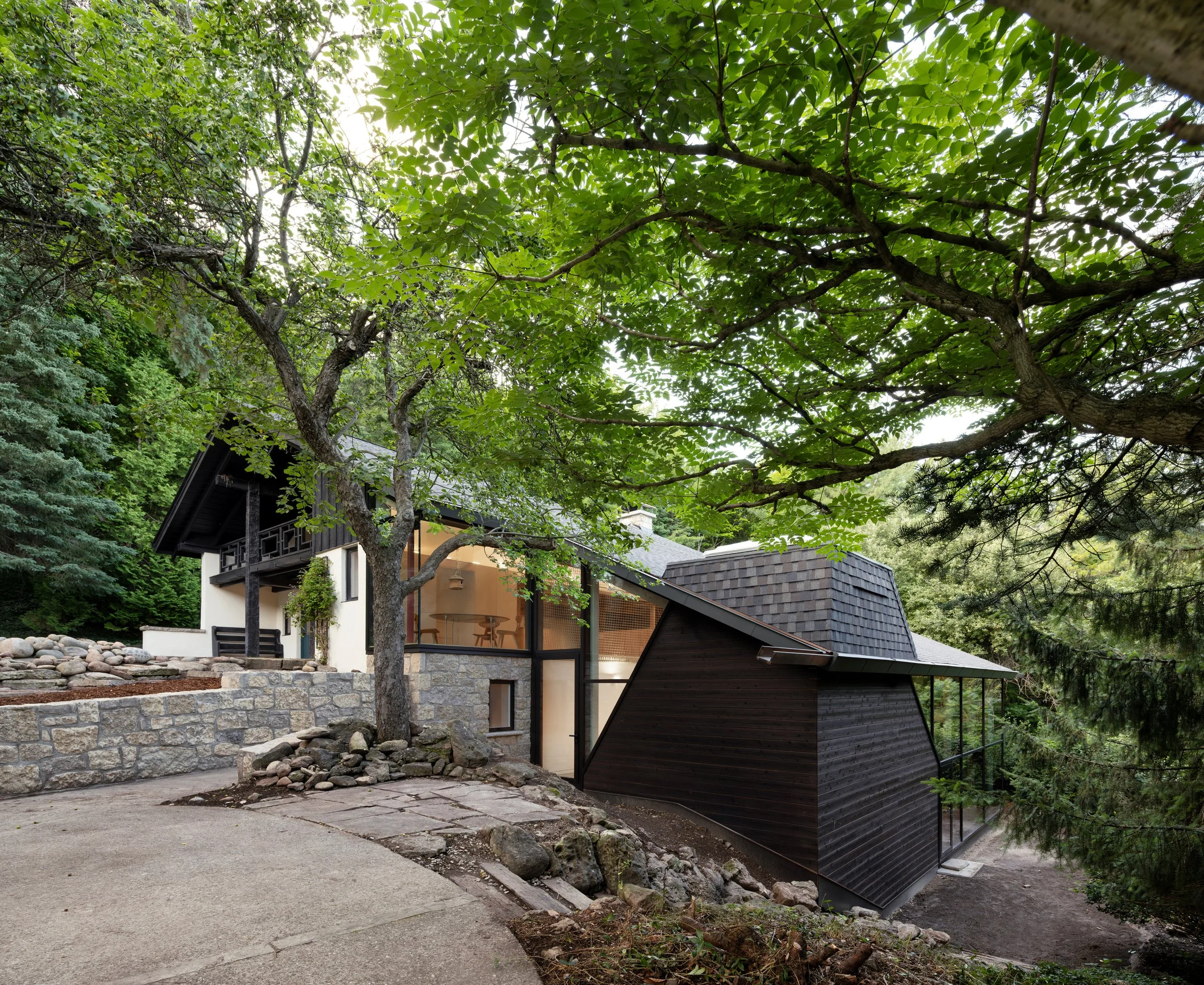
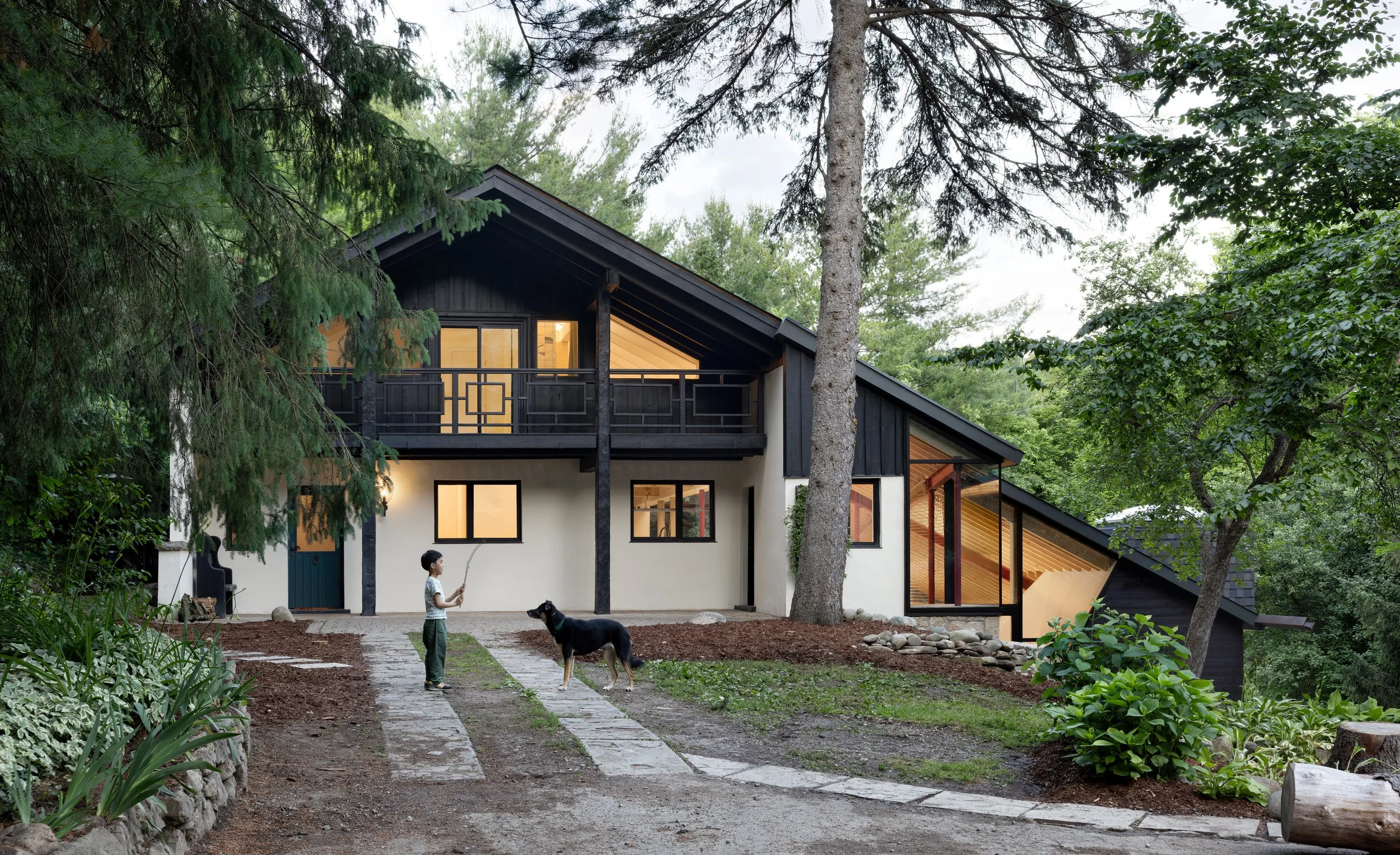
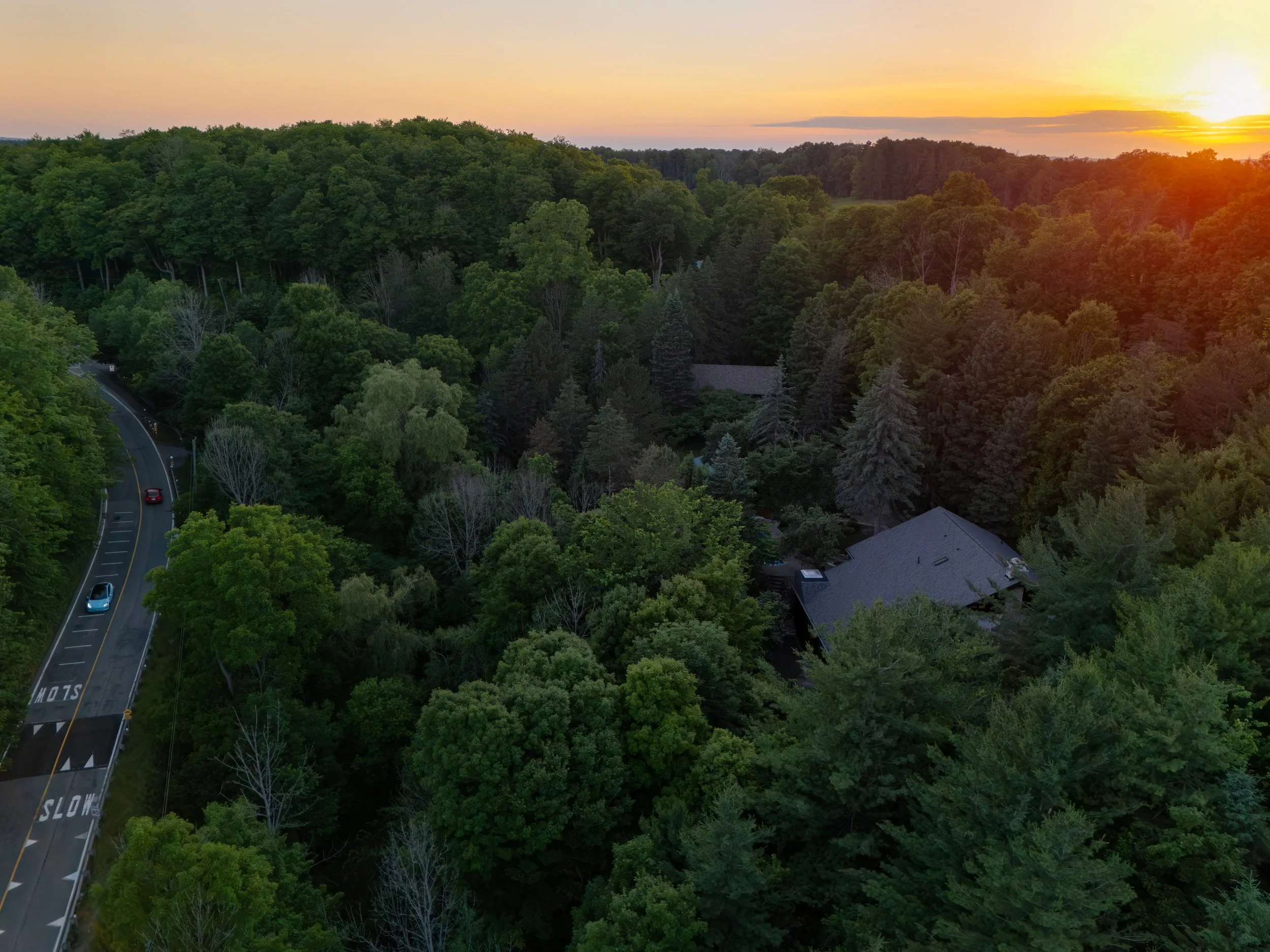
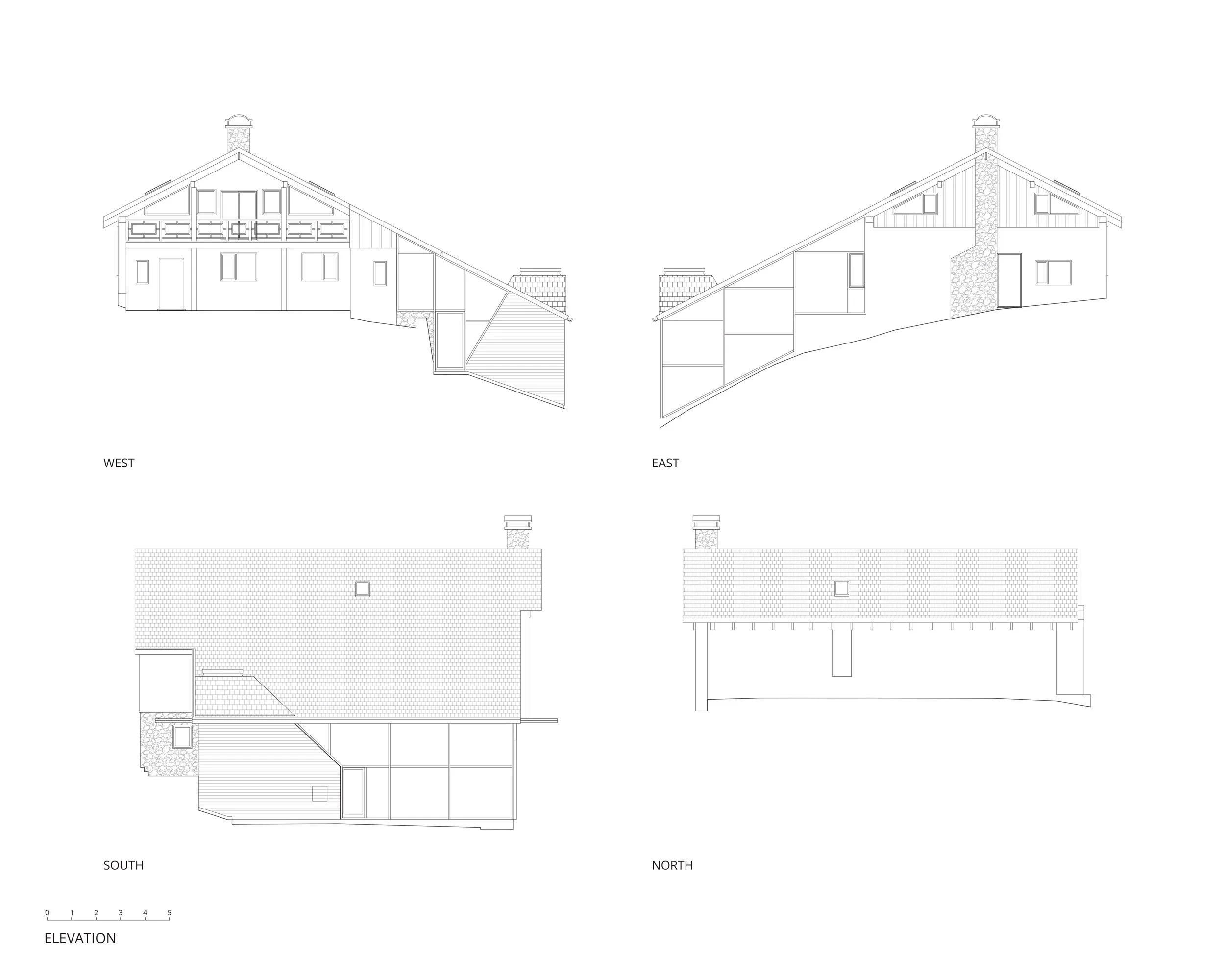
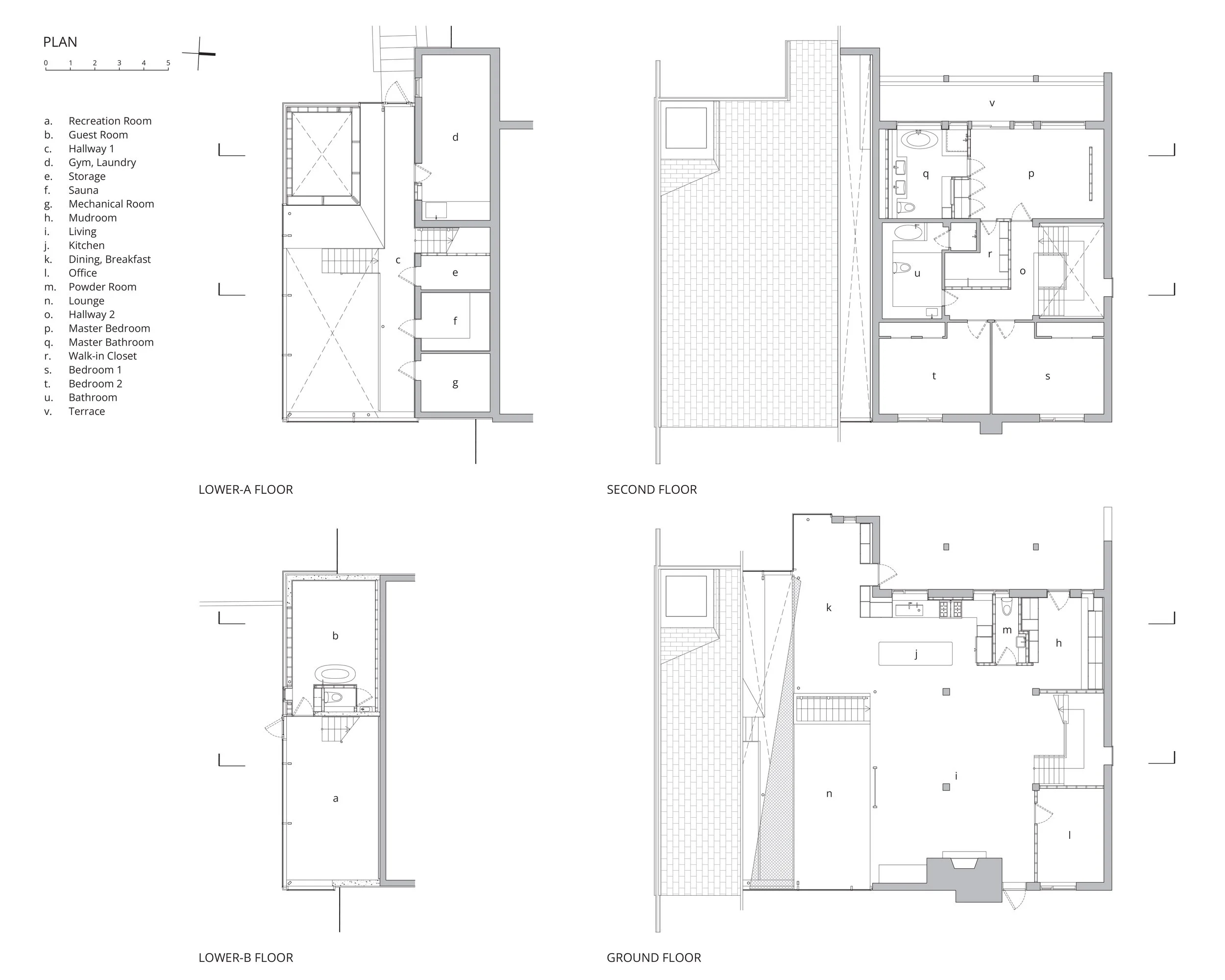
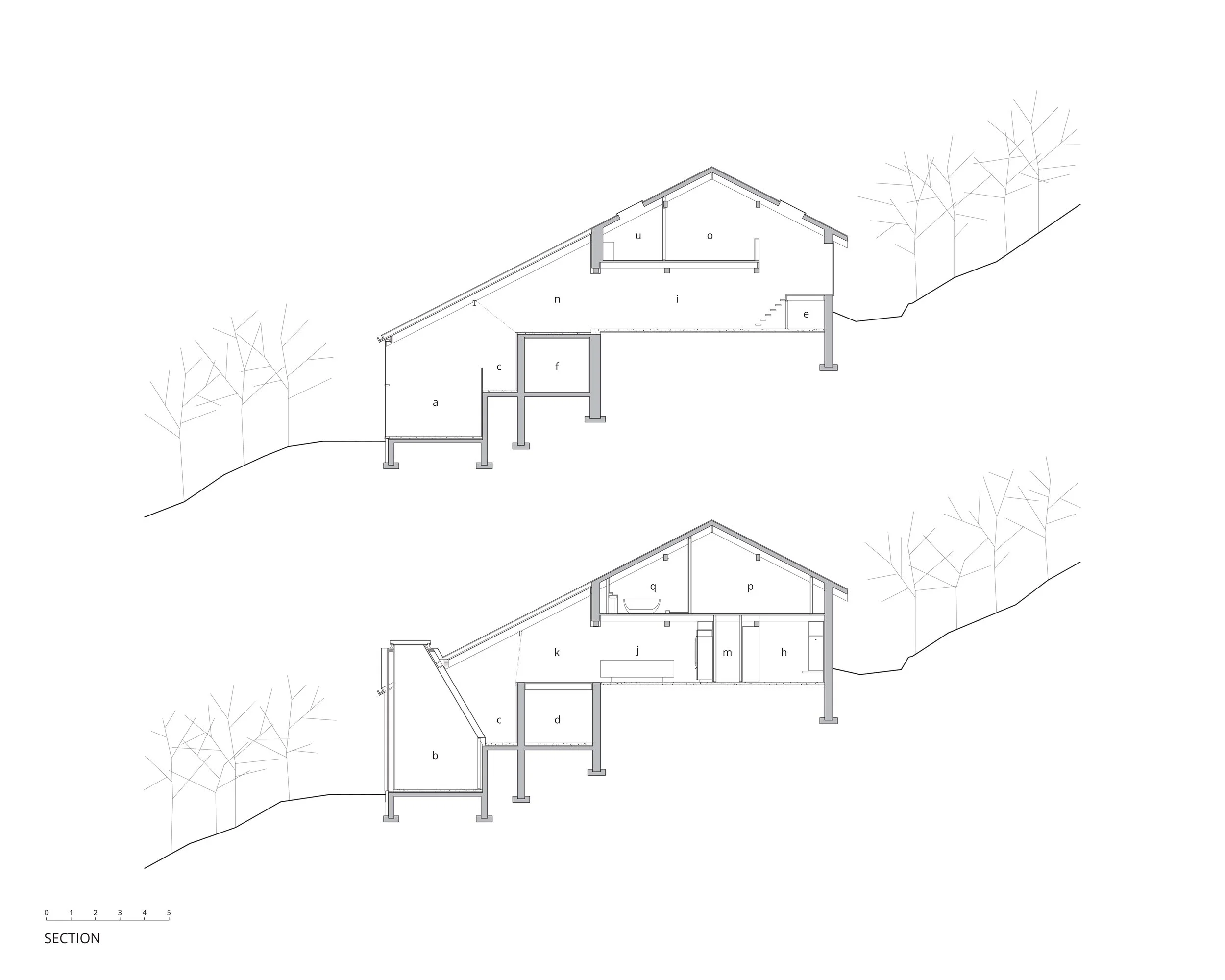
Set within the steep, wooded terrain of the Niagara Escarpment in Belfountain, Ontario, Belfountain House unfolds as a continuous architectural promenade shaped by topography, movement, and family life.
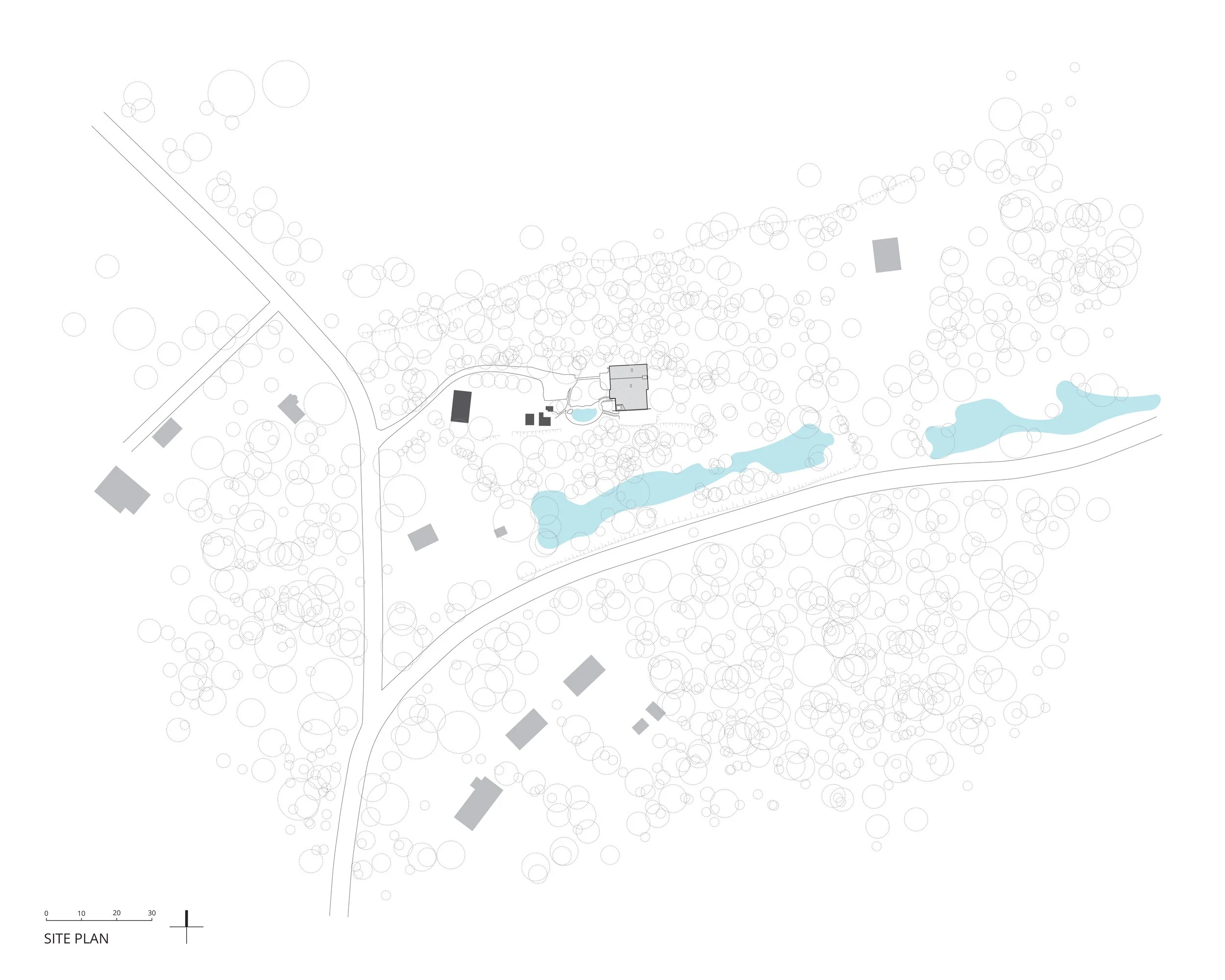
Located on 3.21 acres of densely forested escarpment, the project transforms a 1970s chalet into a 400-square-metre, four-level residence for a philosopher, an artist, their children, and a dog. The design preserves the northern portion of the existing structure while extending the southern half along the original footprint, minimizing disturbance to the site and maintaining a close relationship with the landscape. Rather than relying on expansion, the project is shaped through subtraction, reorganization, and sectional clarity. The steep terrain, mature tree canopy, and desire for openness presented both spatial and structural challenges, requiring the architecture to respond carefully to the changing conditions of the slope.
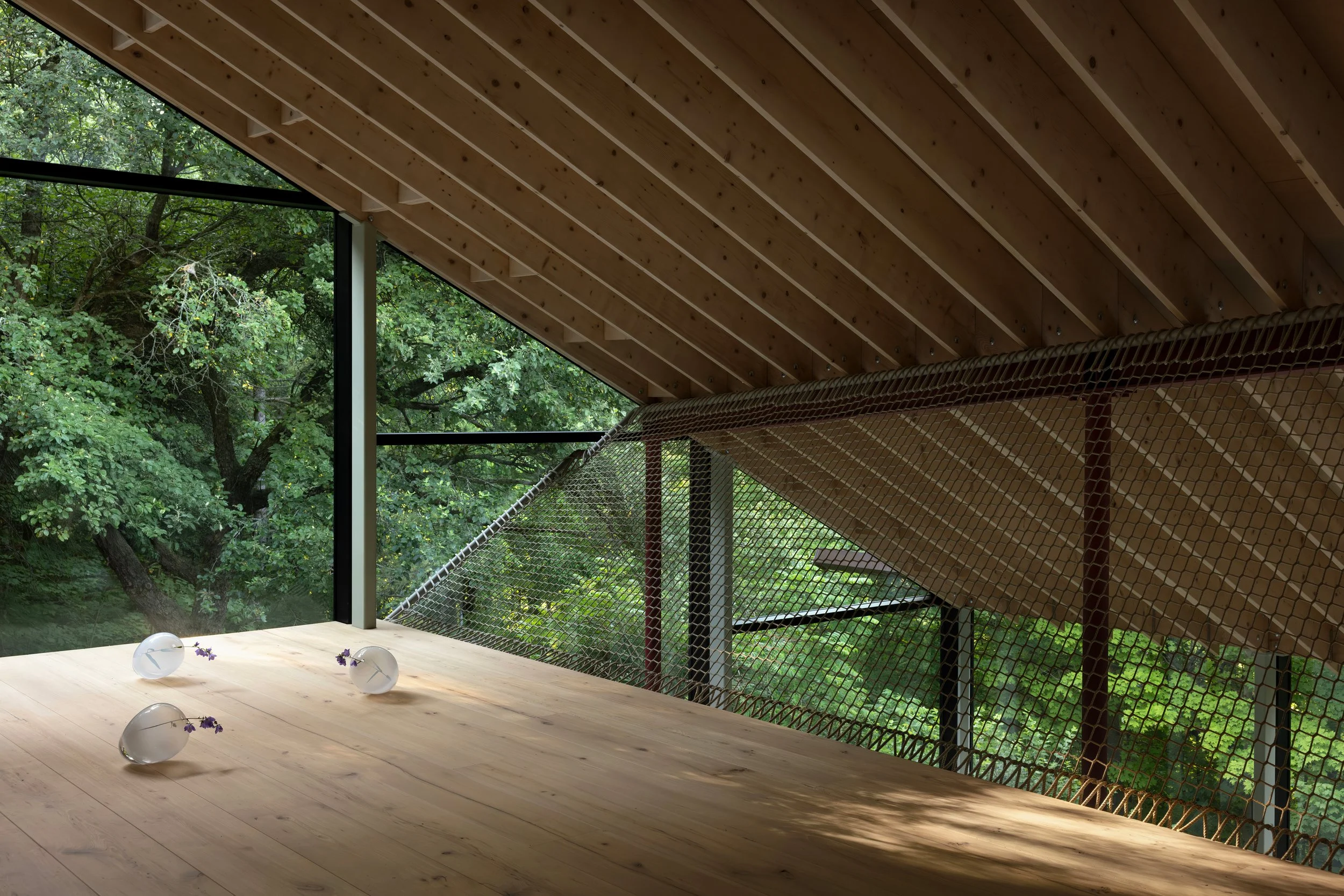
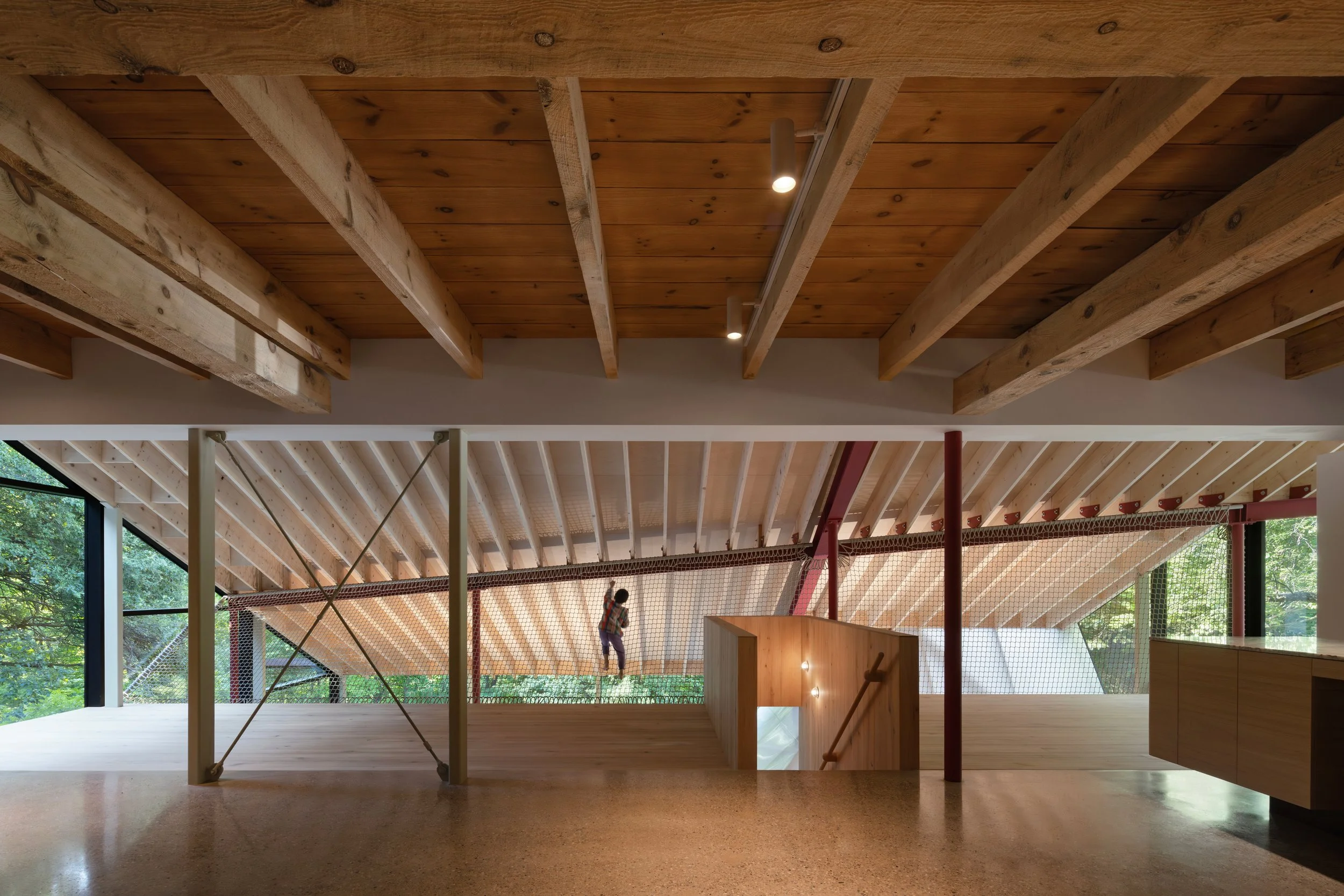
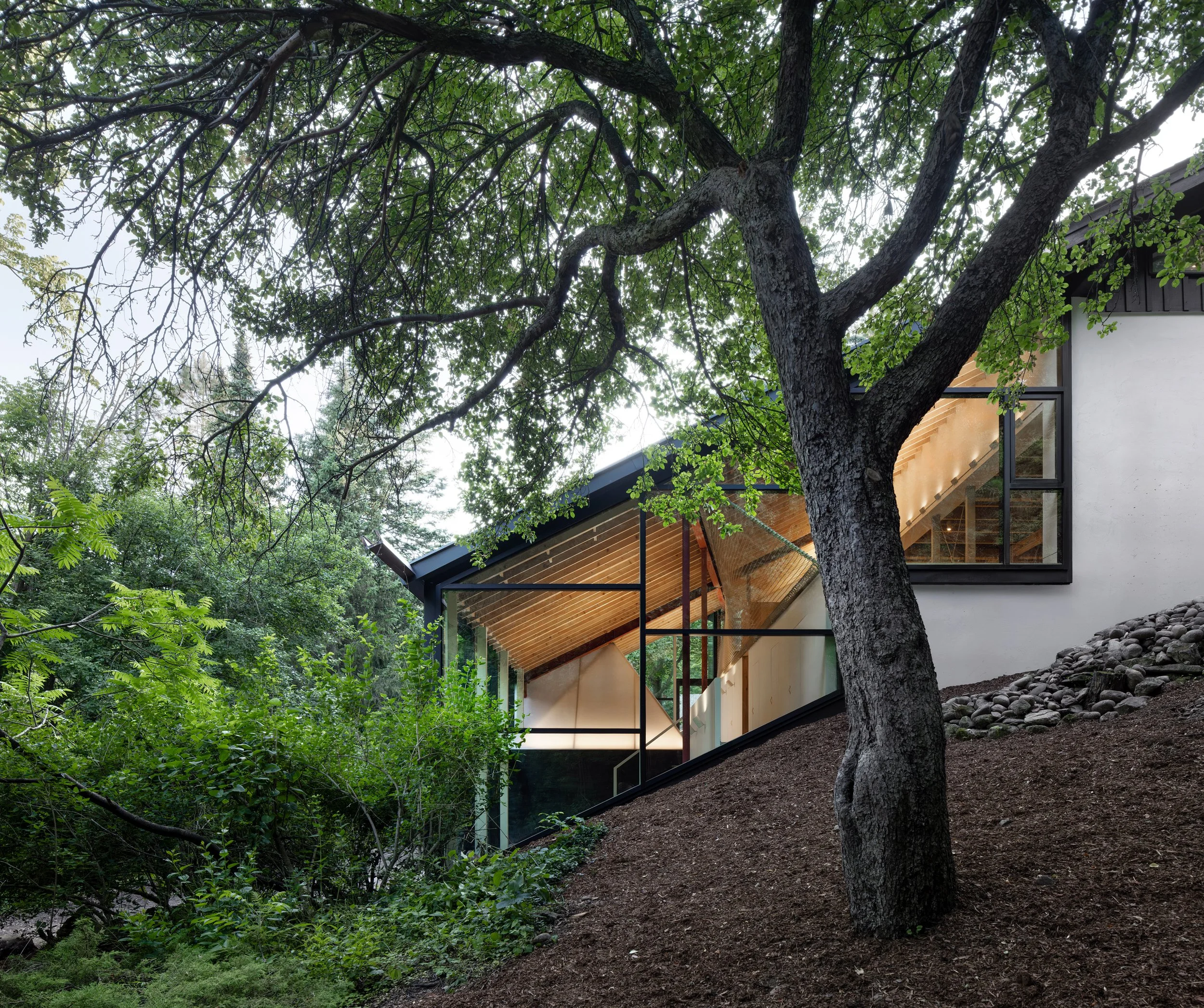
A single elongated roof stretches across the hillside, gathering the life of the house beneath one continuous span. Conceived as a sectional response to the terrain, the architecture organizes space through shifts in level, compression, and light rather than rigid enclosure, creating a fluid interior landscape attuned to the rhythms of daily life.
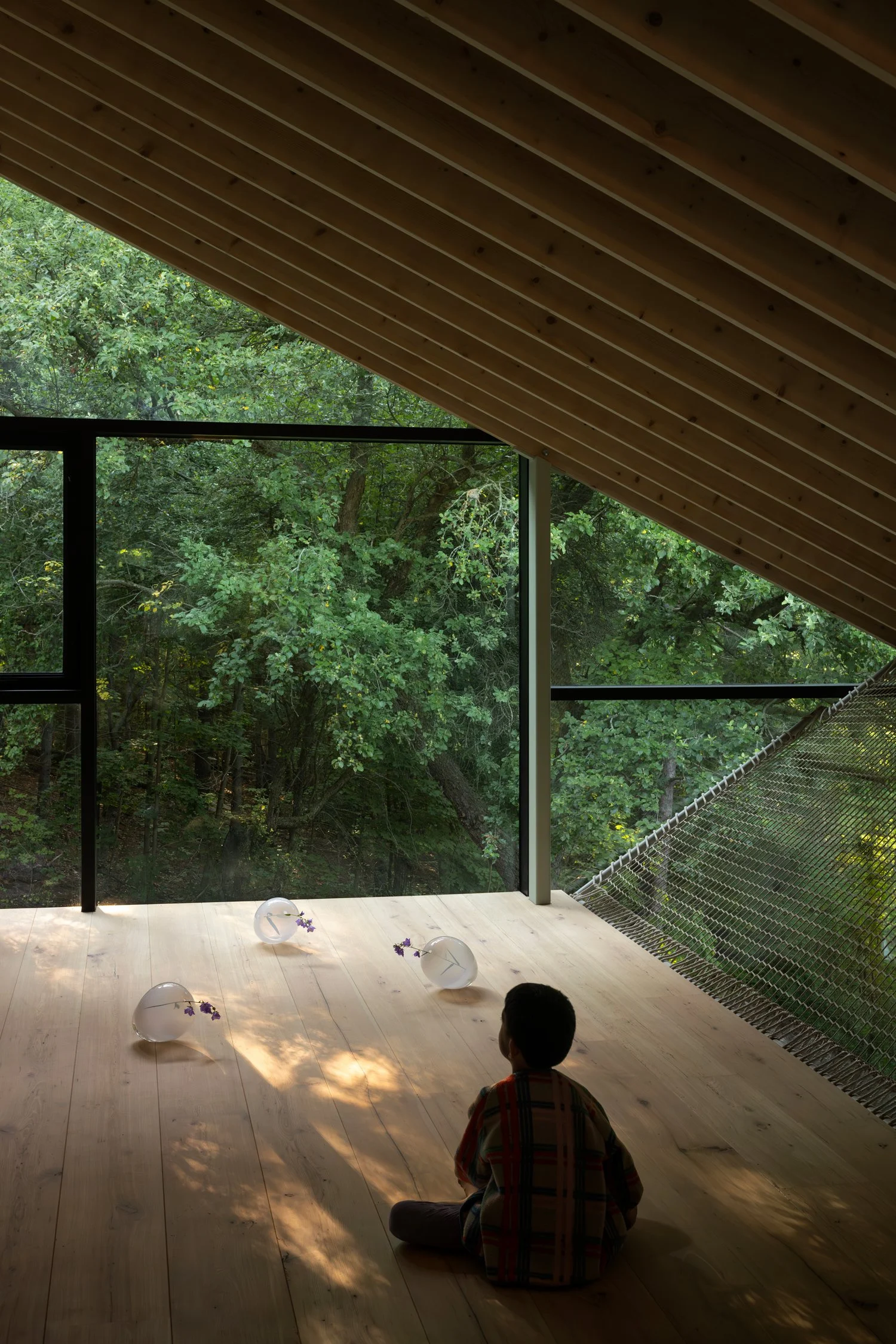
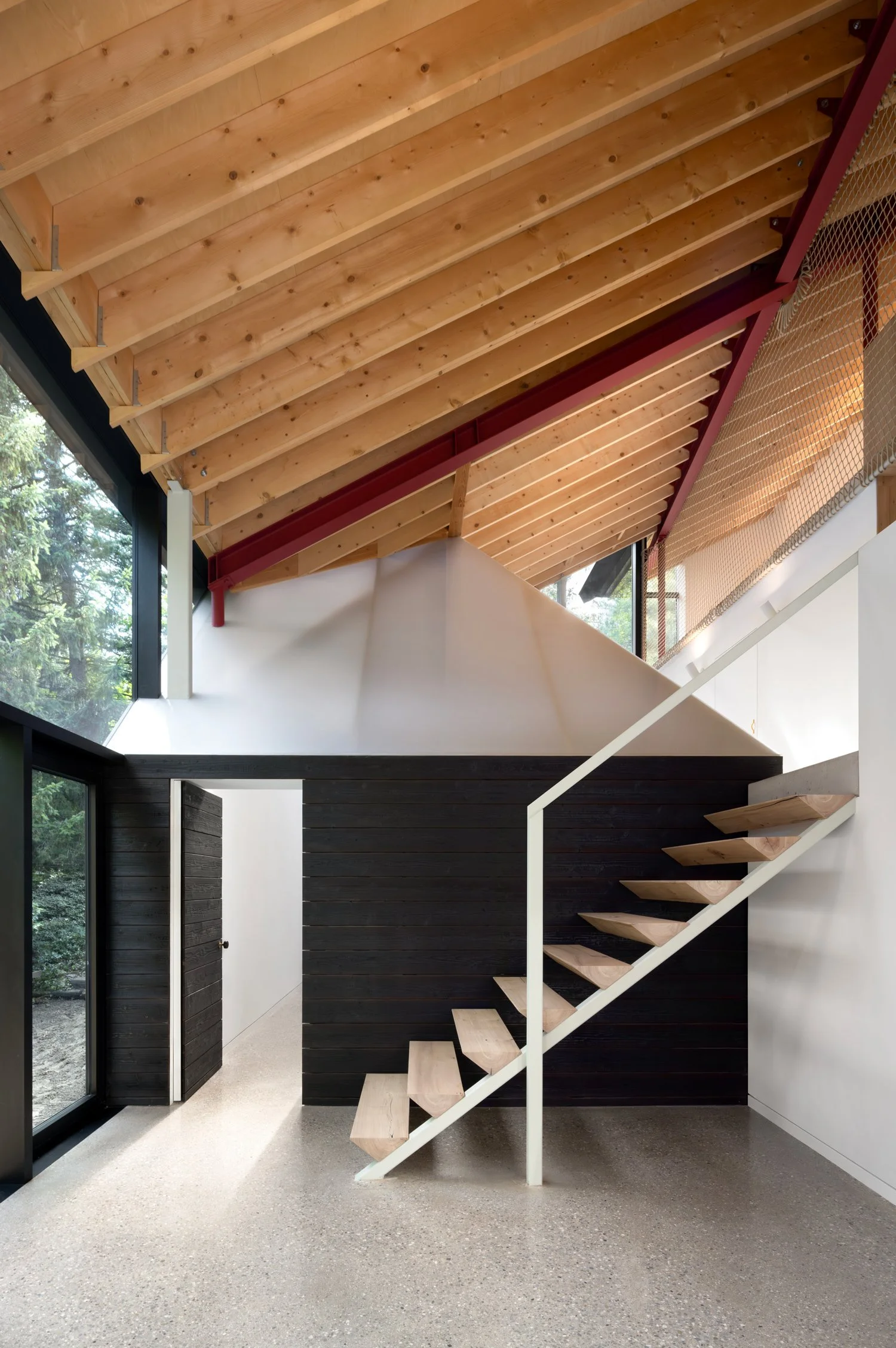
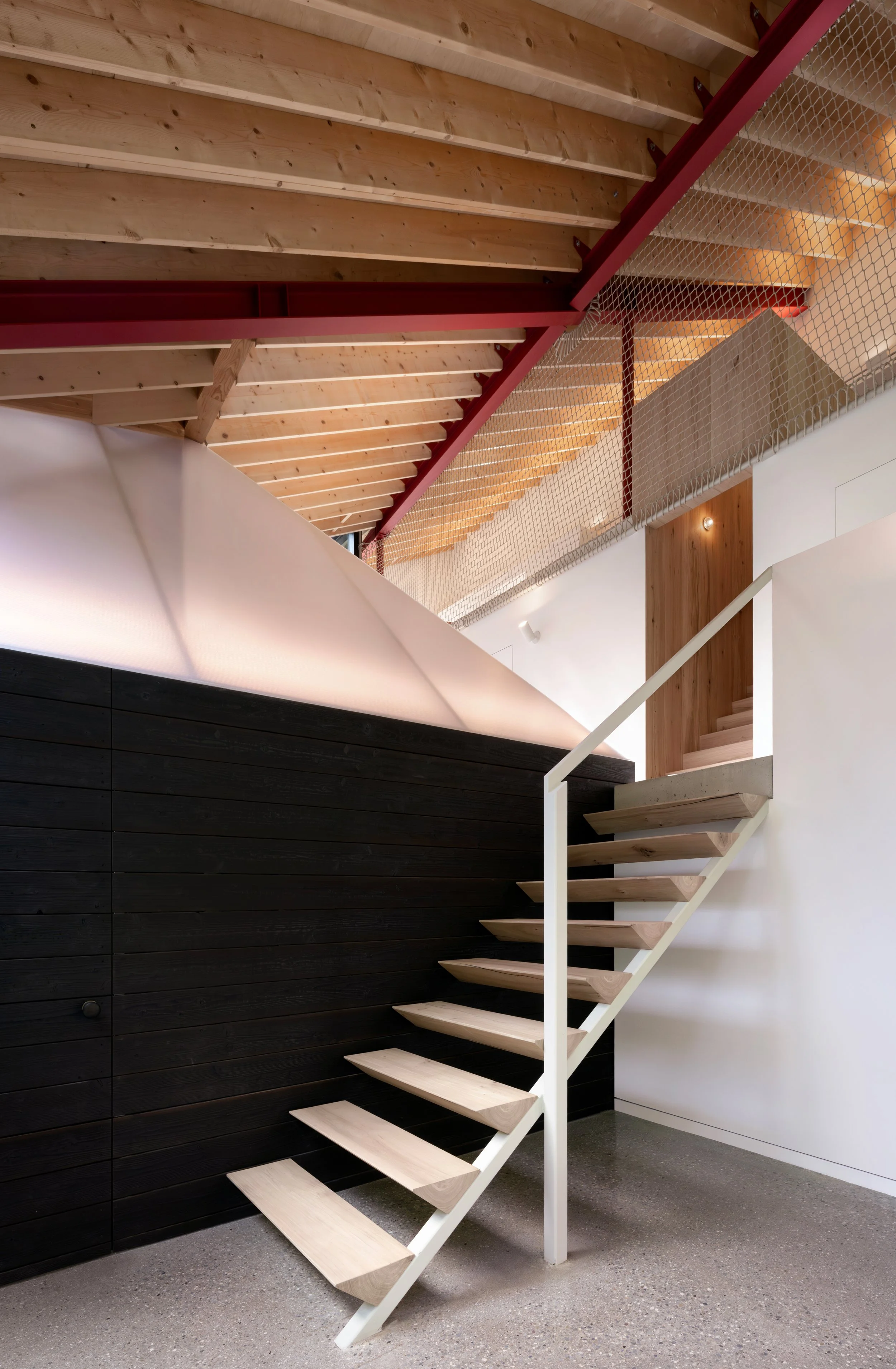
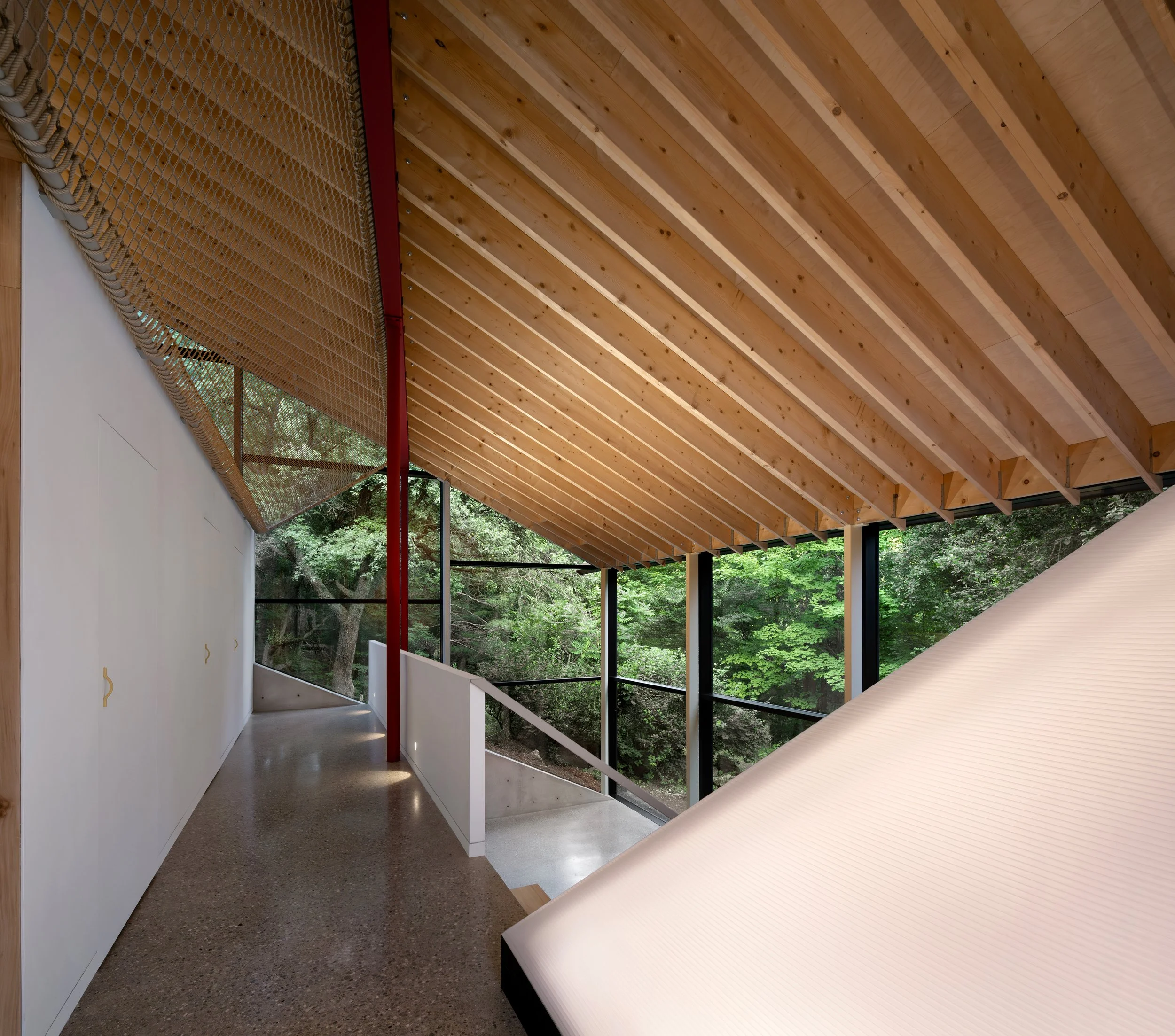
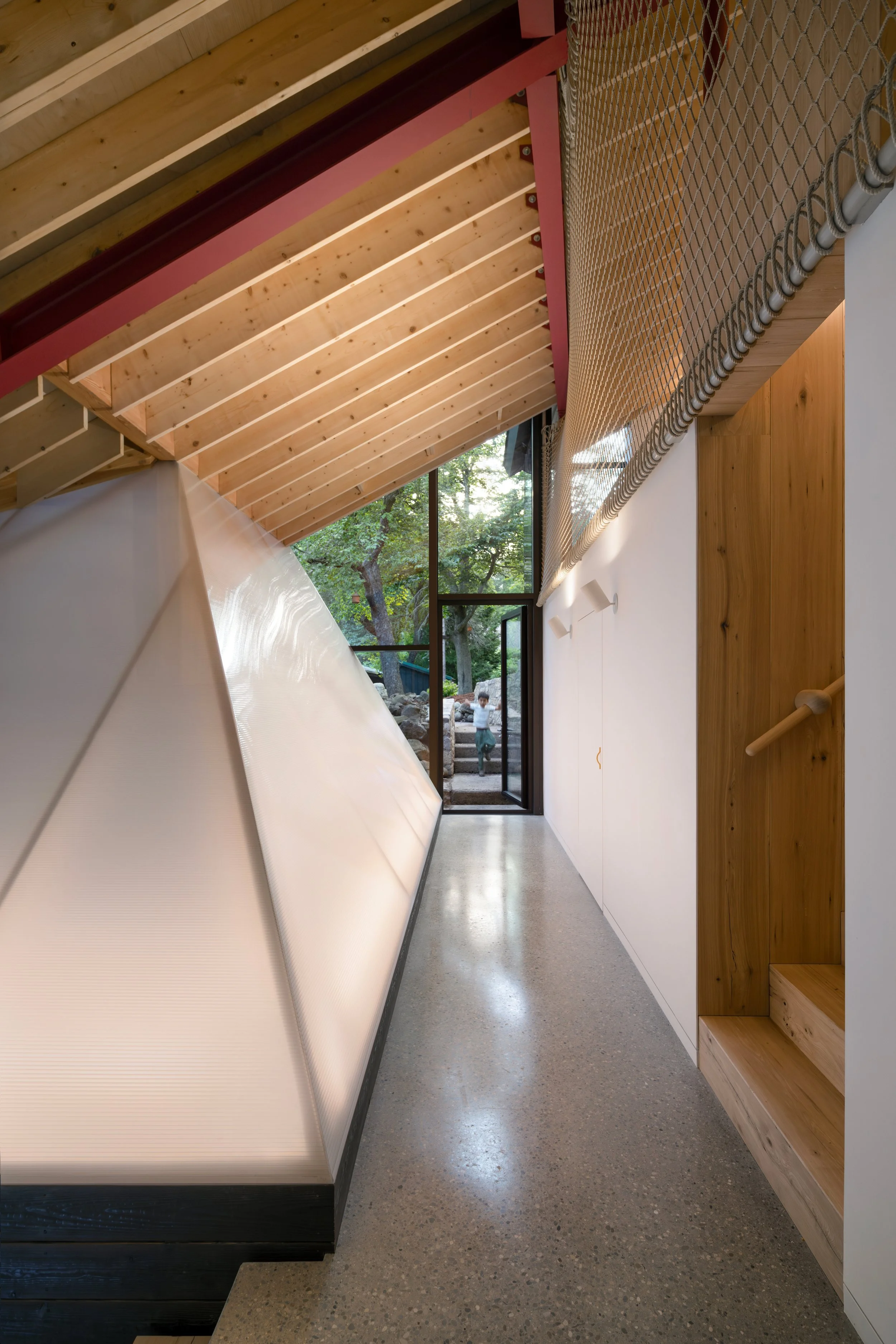
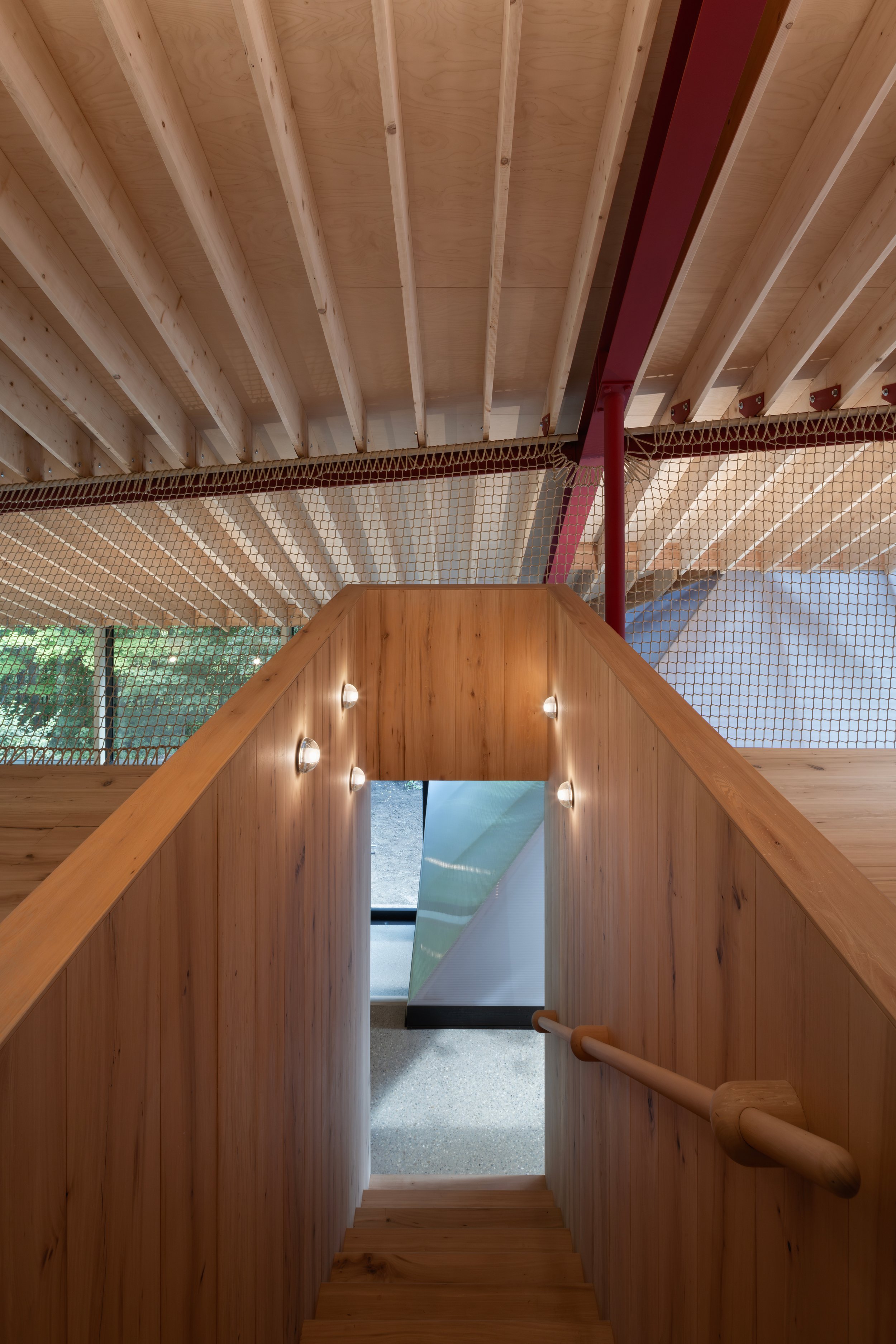
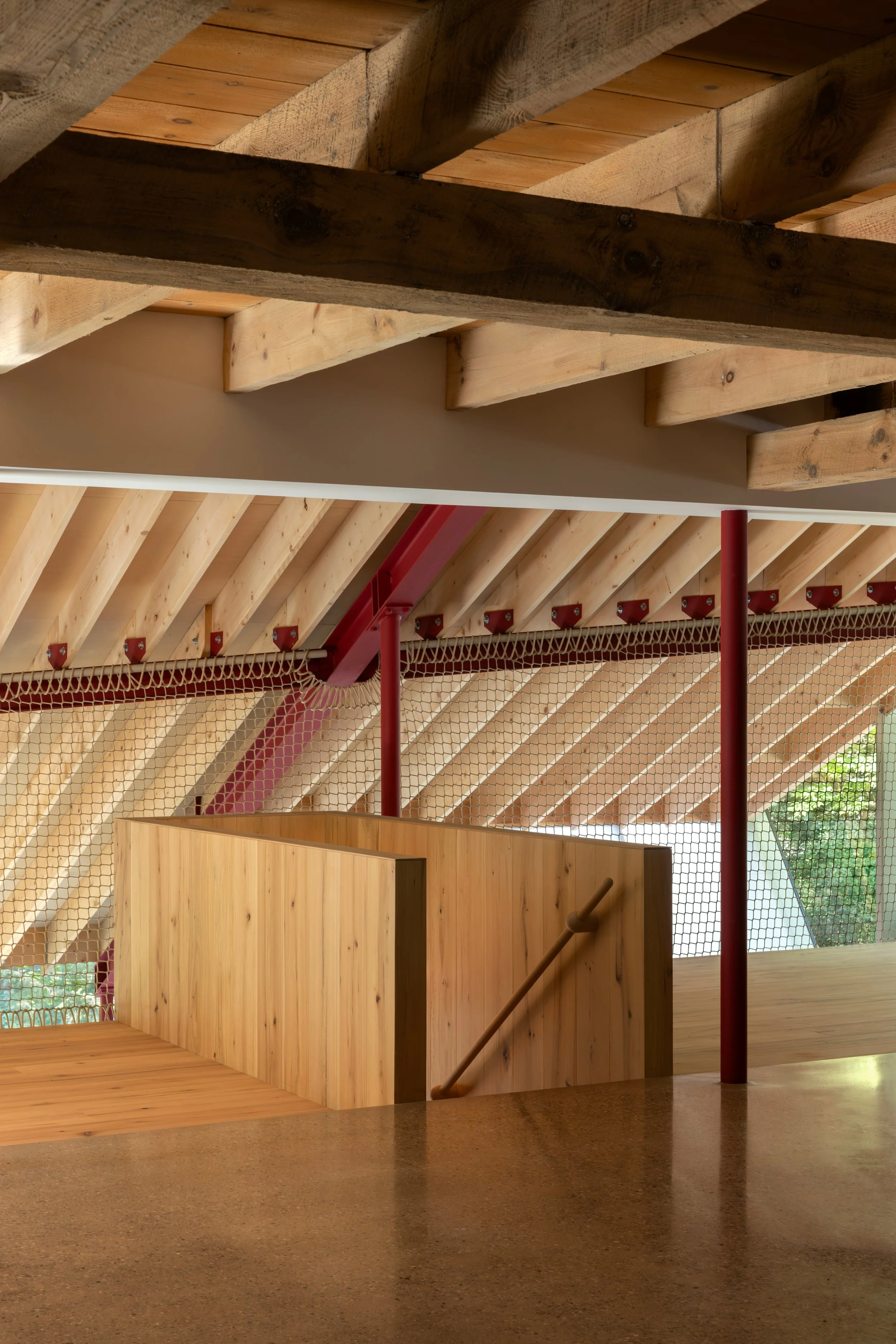
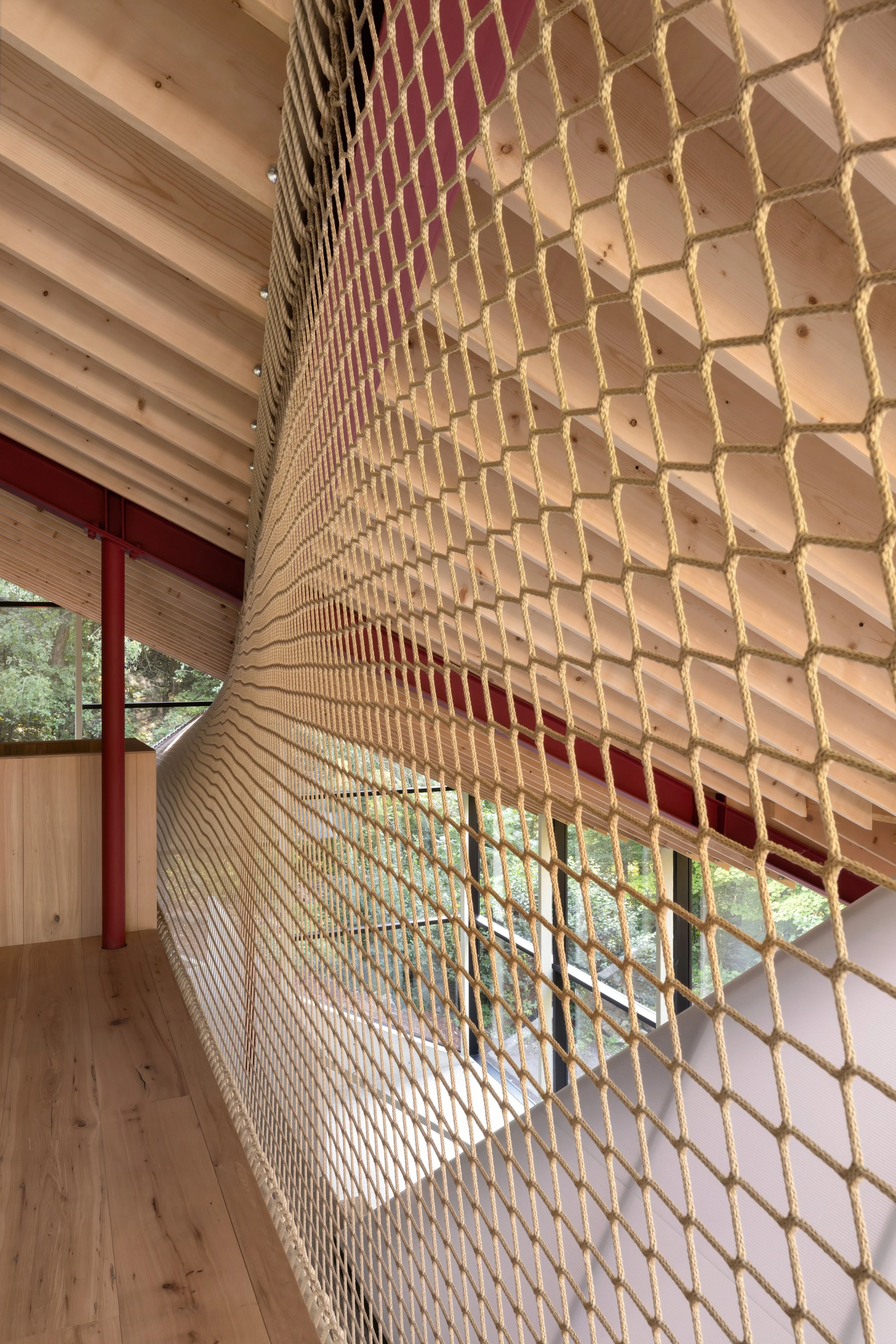
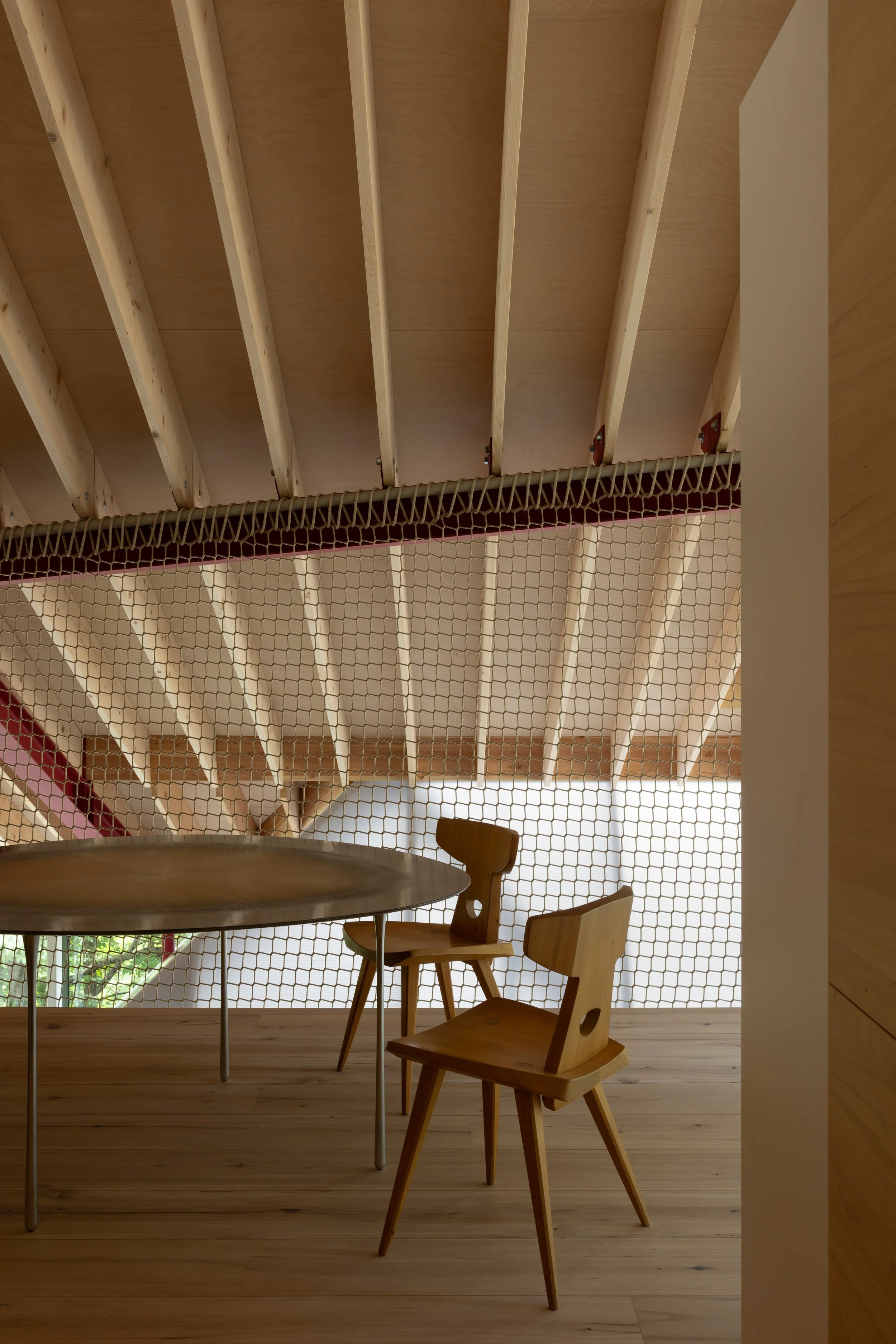
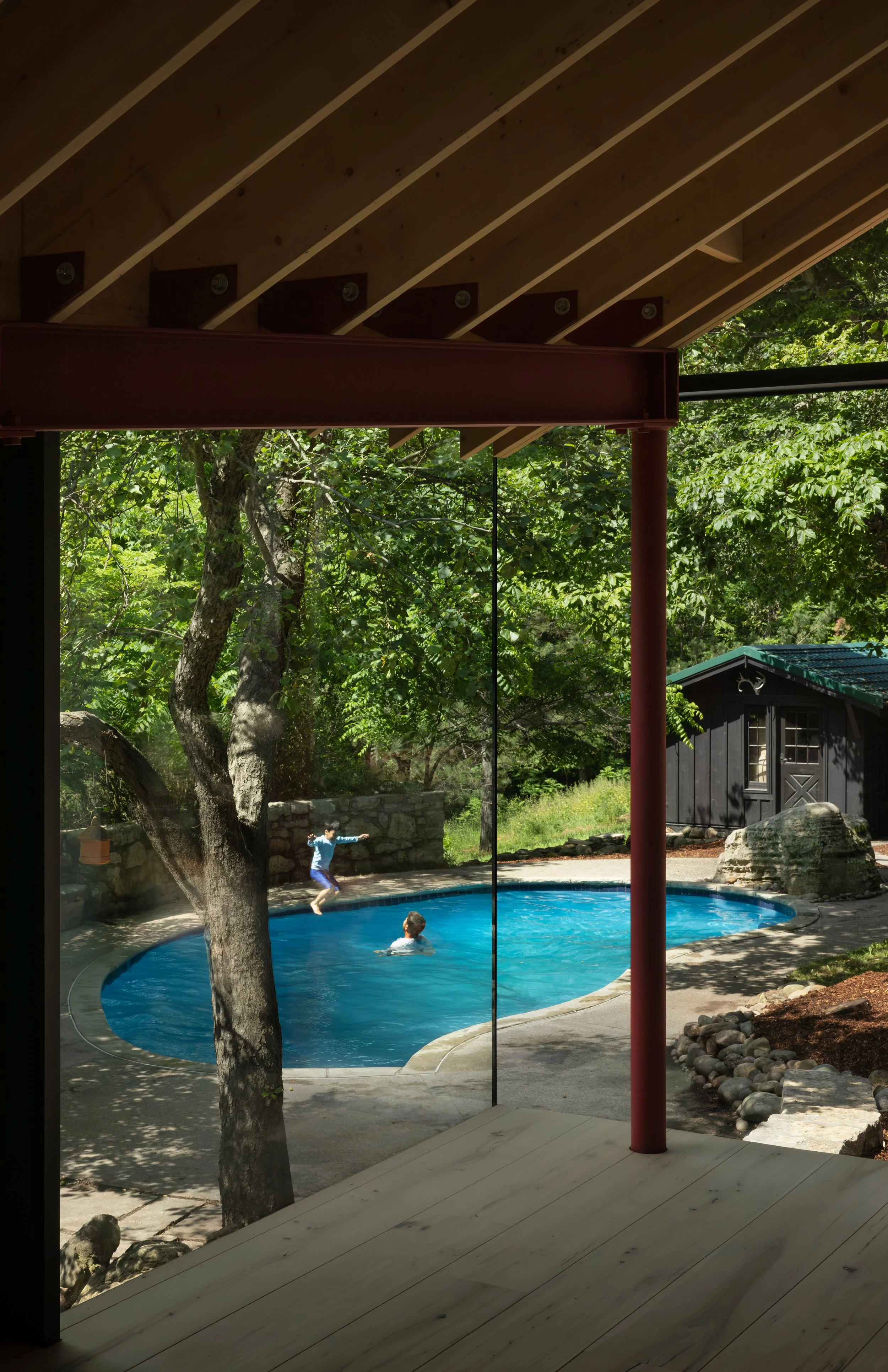
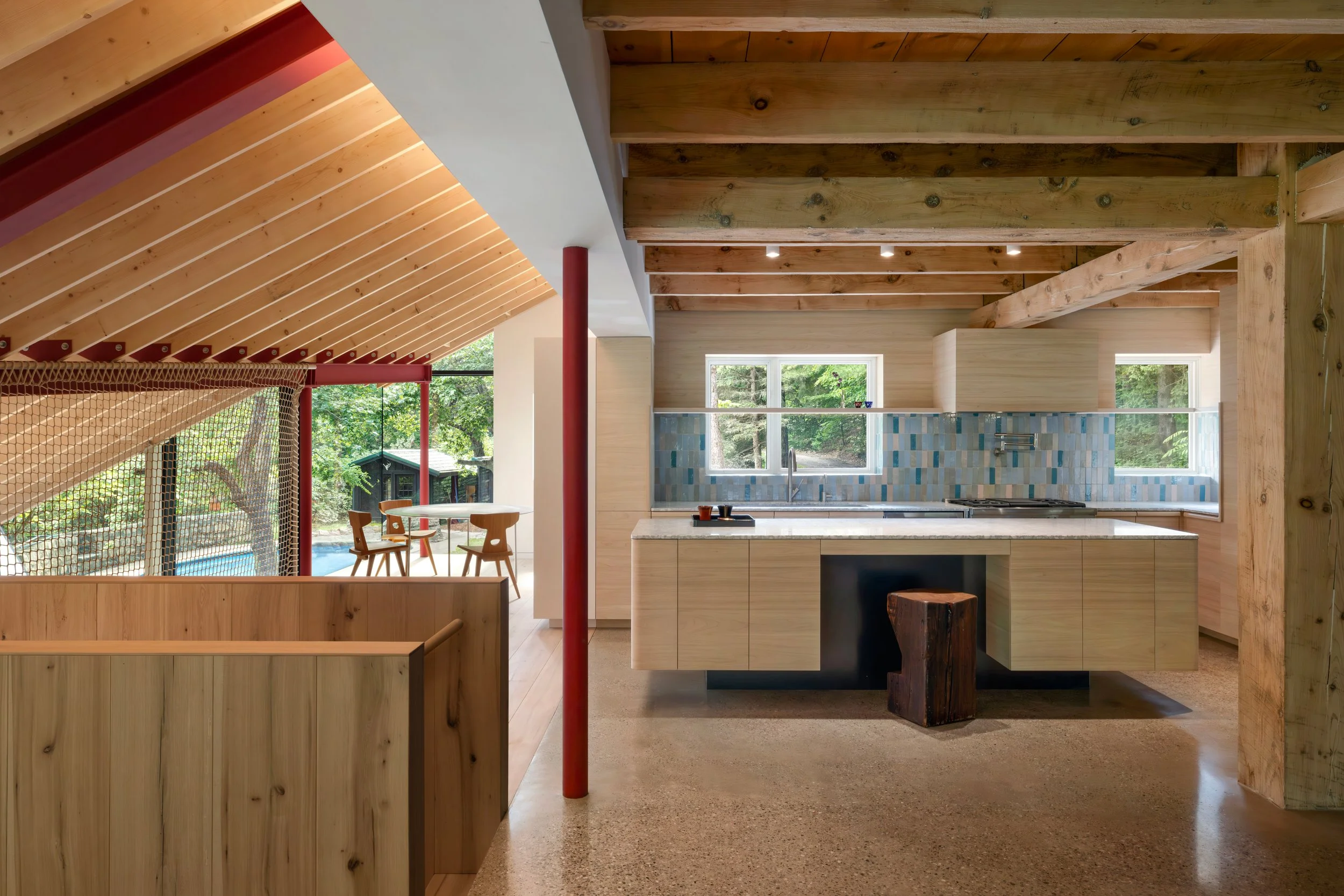
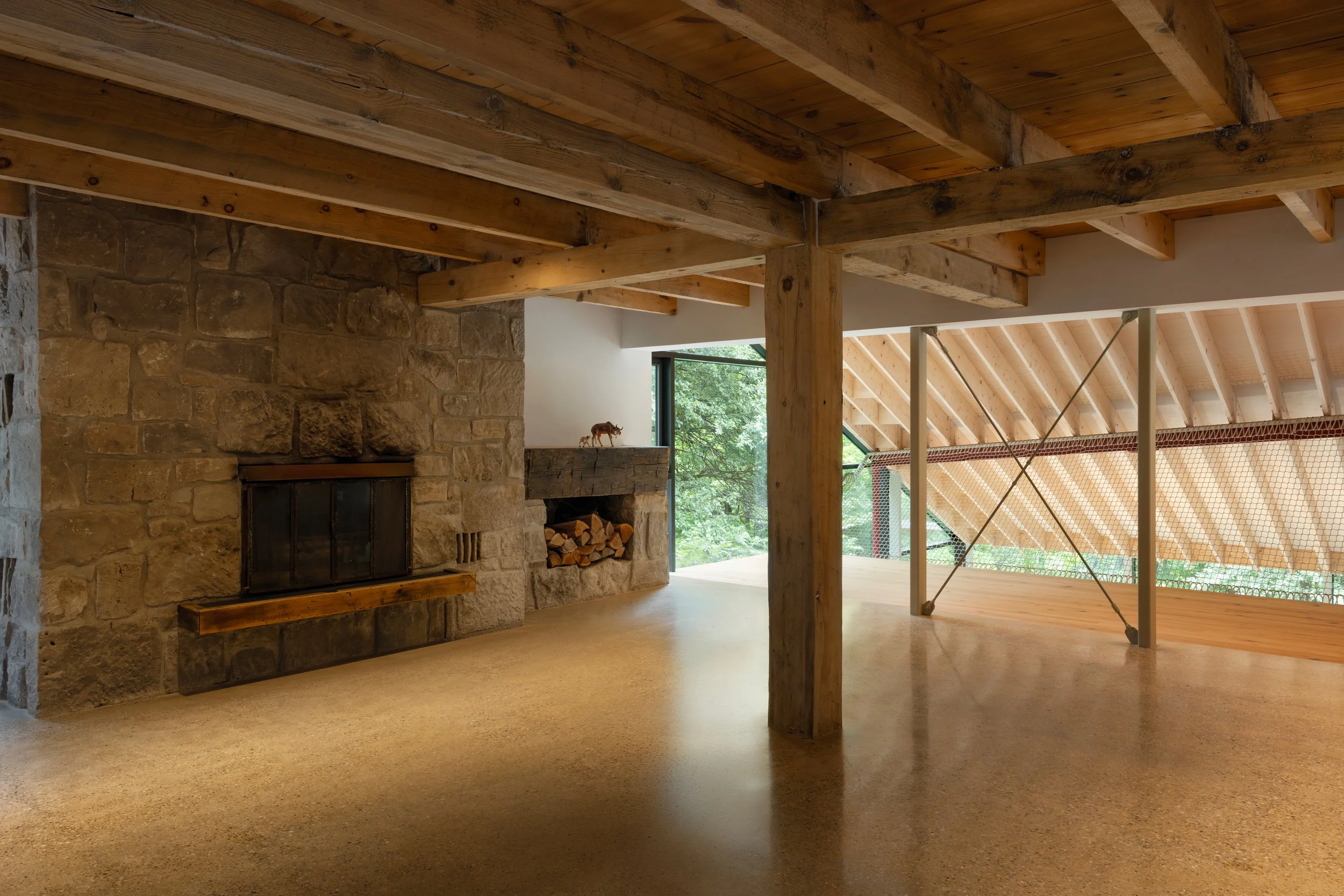
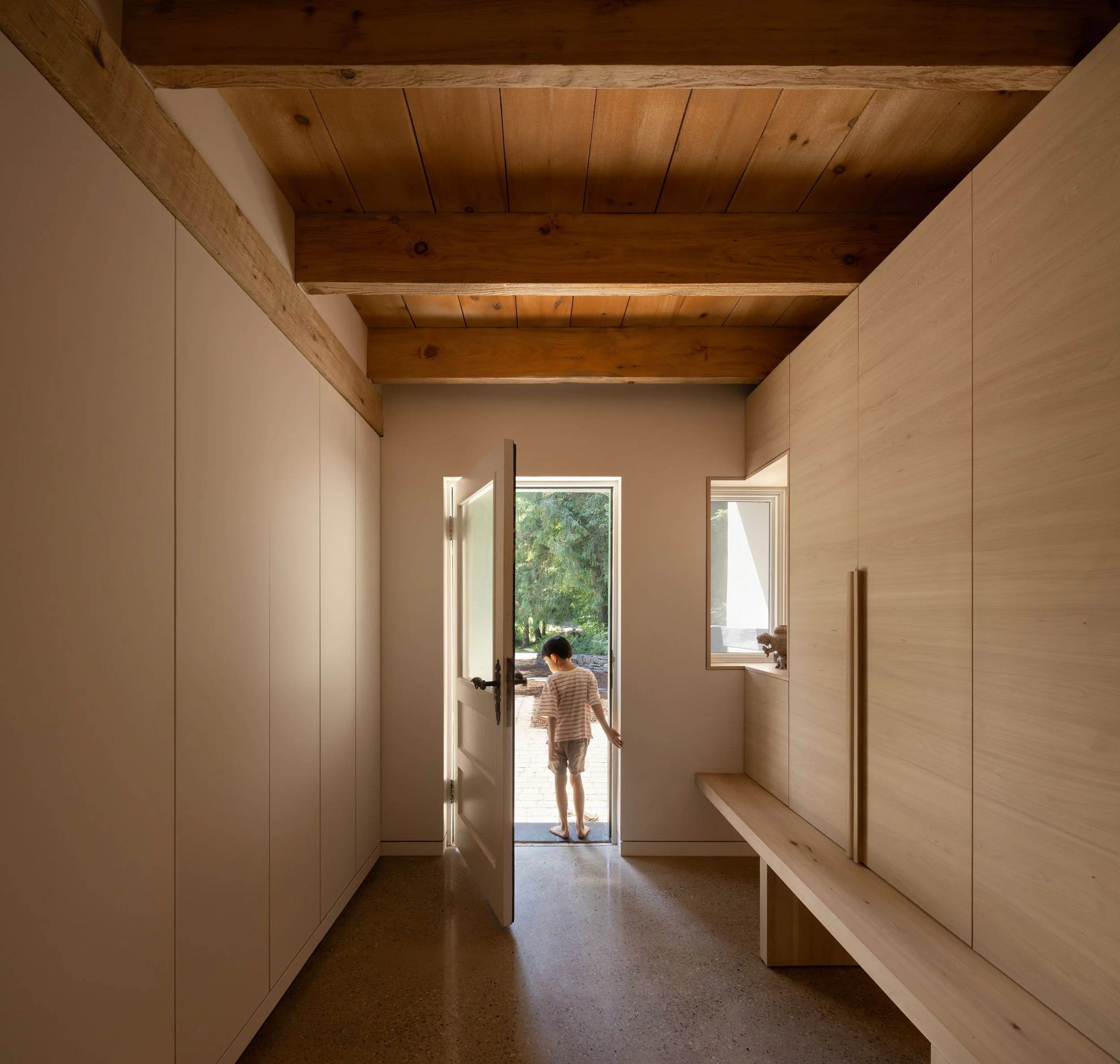
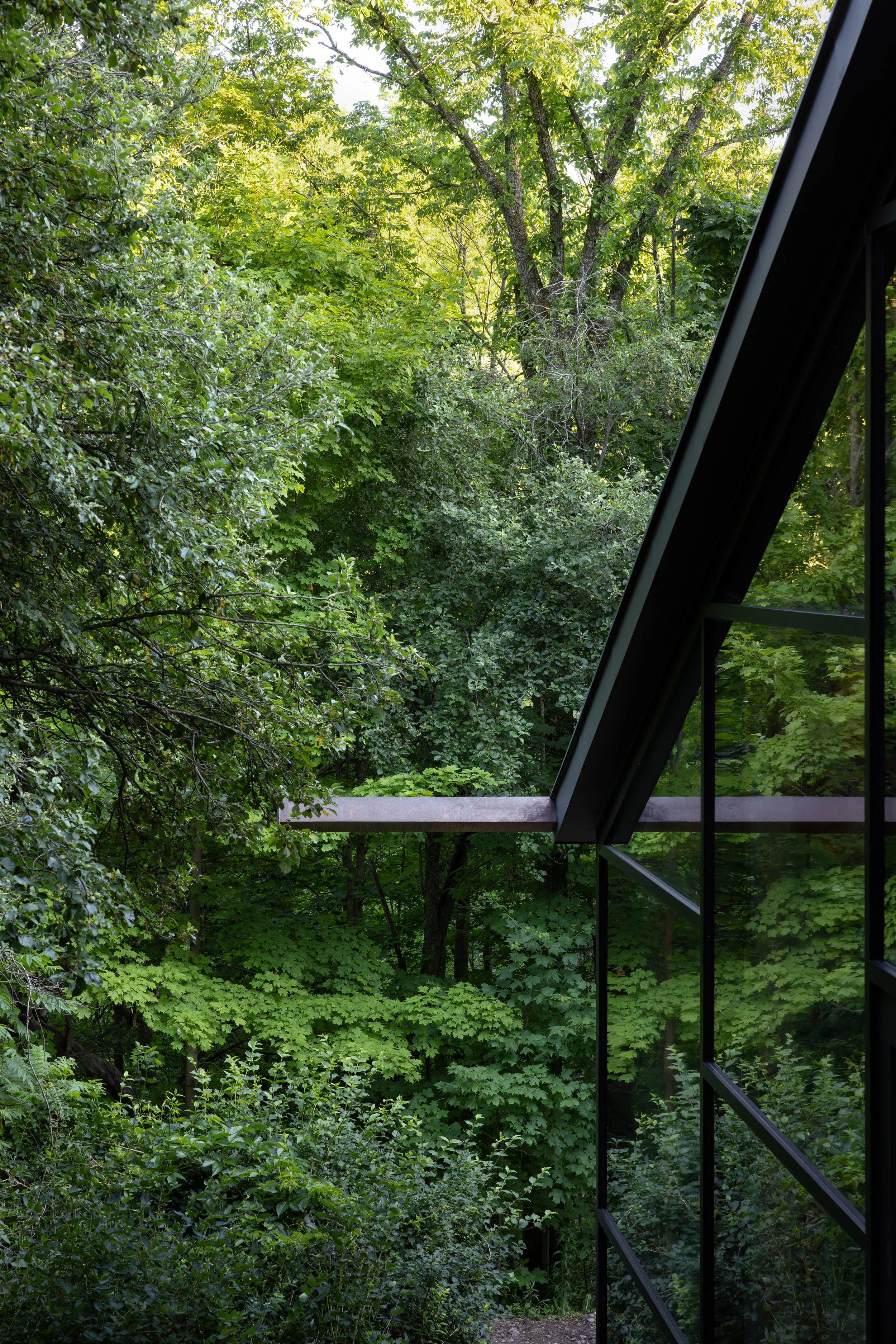
Movement through the house recalls the cadence of hiking through the surrounding forest—sequential, episodic, and constantly shifting in atmosphere. The approach is gradual: visitors pass the artist’s studio and pool before the house quietly emerges within the trees. Entry occurs through a compressed timber-lined mudroom that gives way to a soaring living room anchored by a fireplace. Exposed rafters extend outward toward the canopy, intersected by diagonal red steel beams that stabilize the span while introducing a bold visual counterpoint. Suspended above the main living space, a large net functions simultaneously as barrier, hammock, and inhabitable surface for play, gathering, and rest.
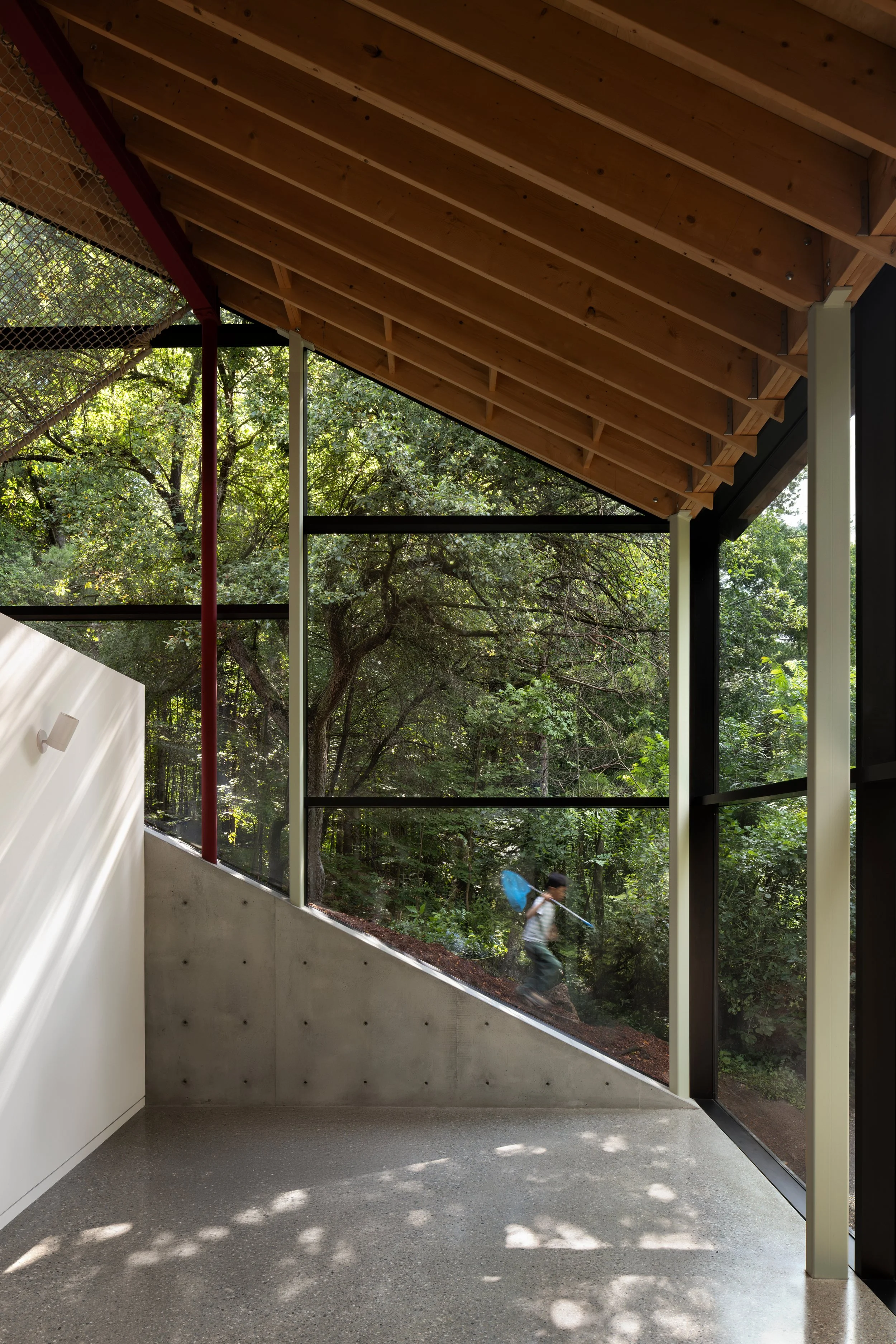
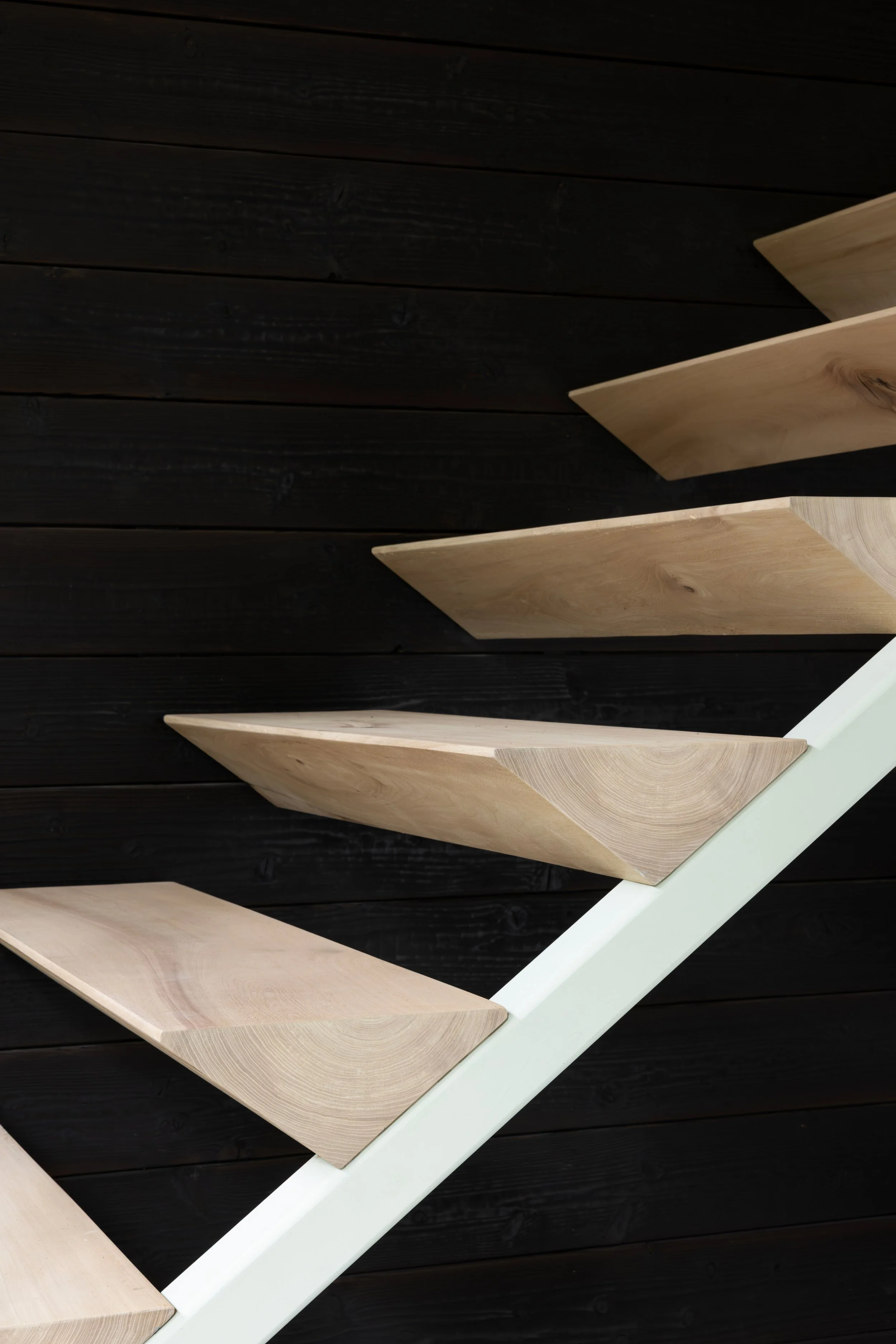
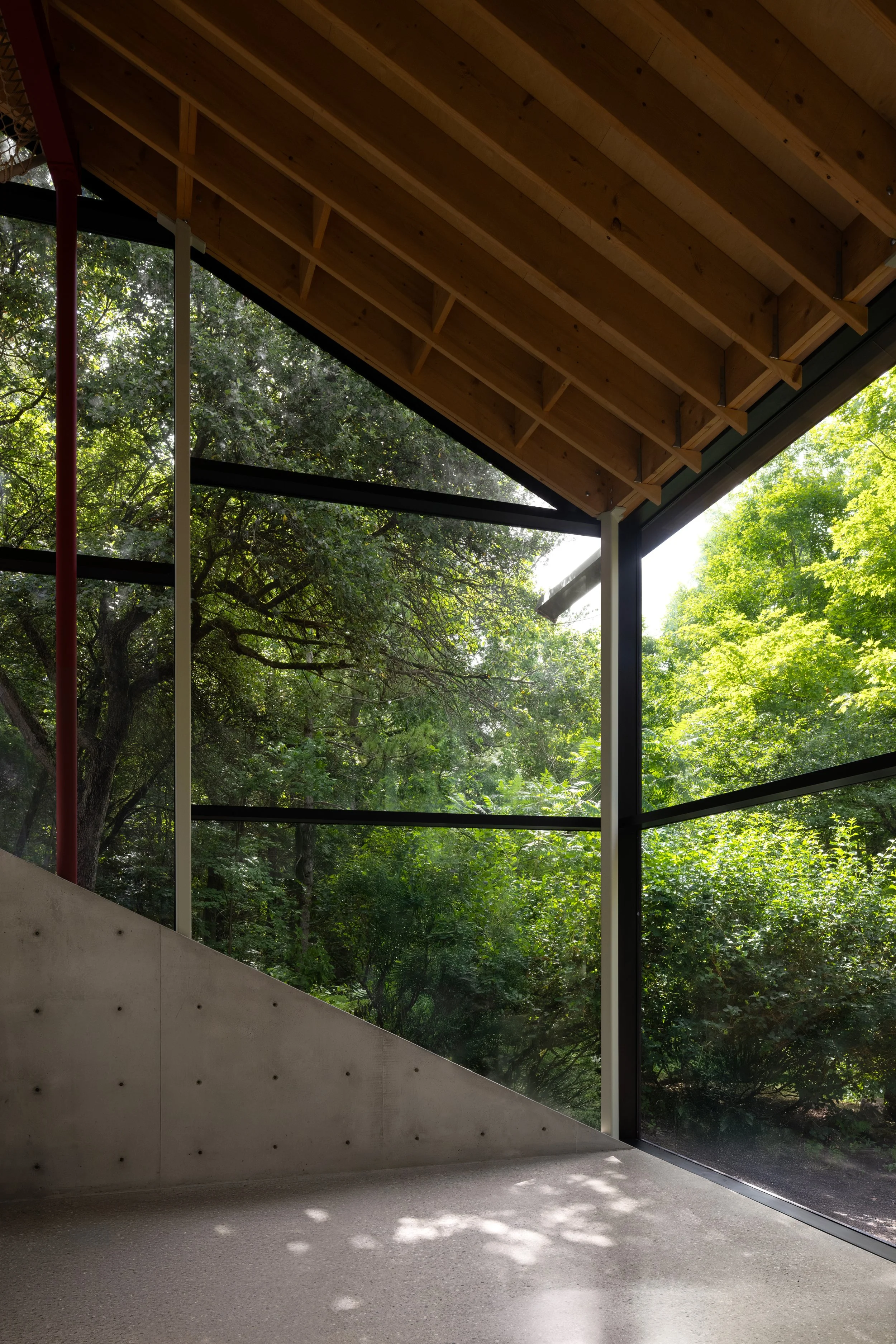
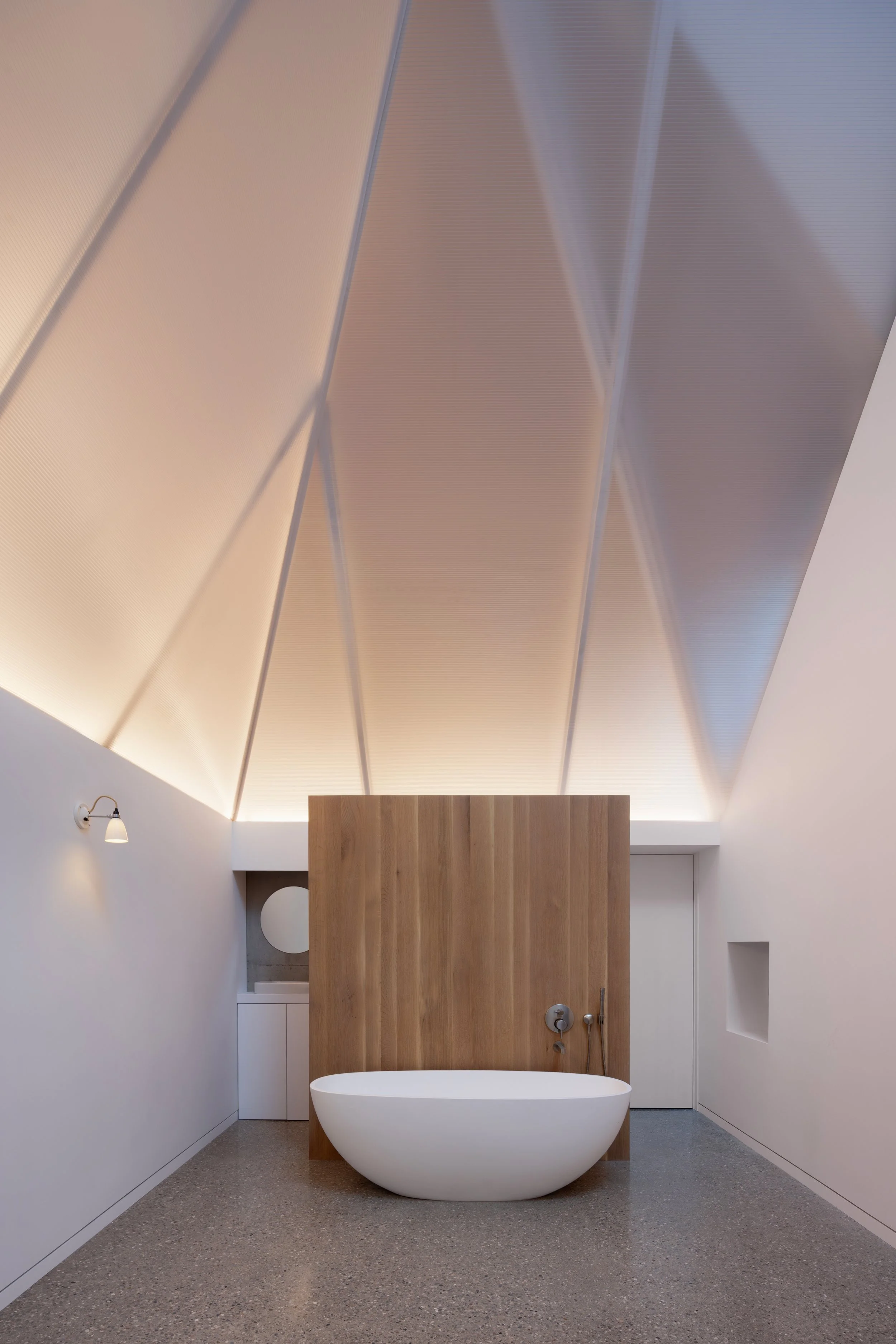
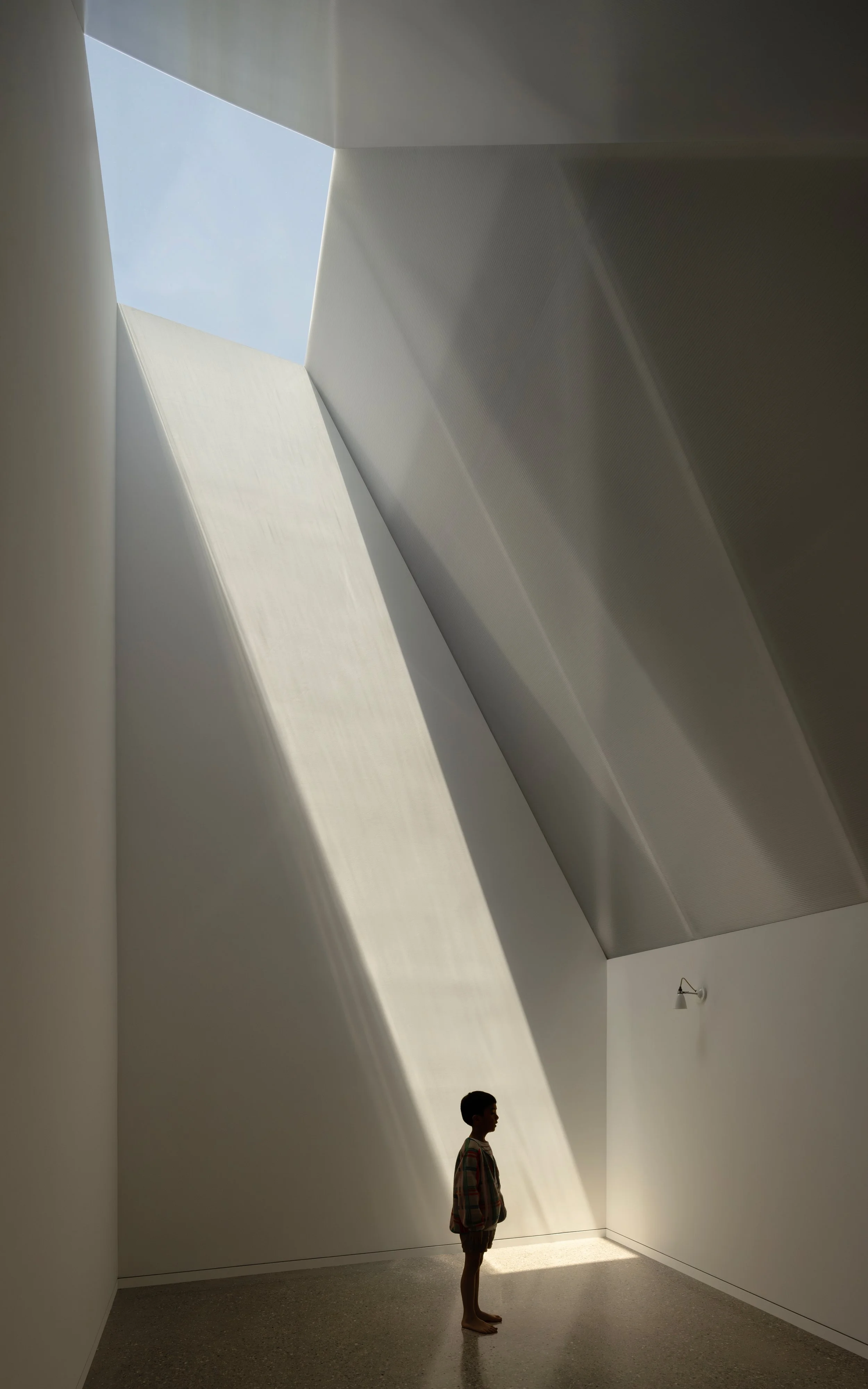
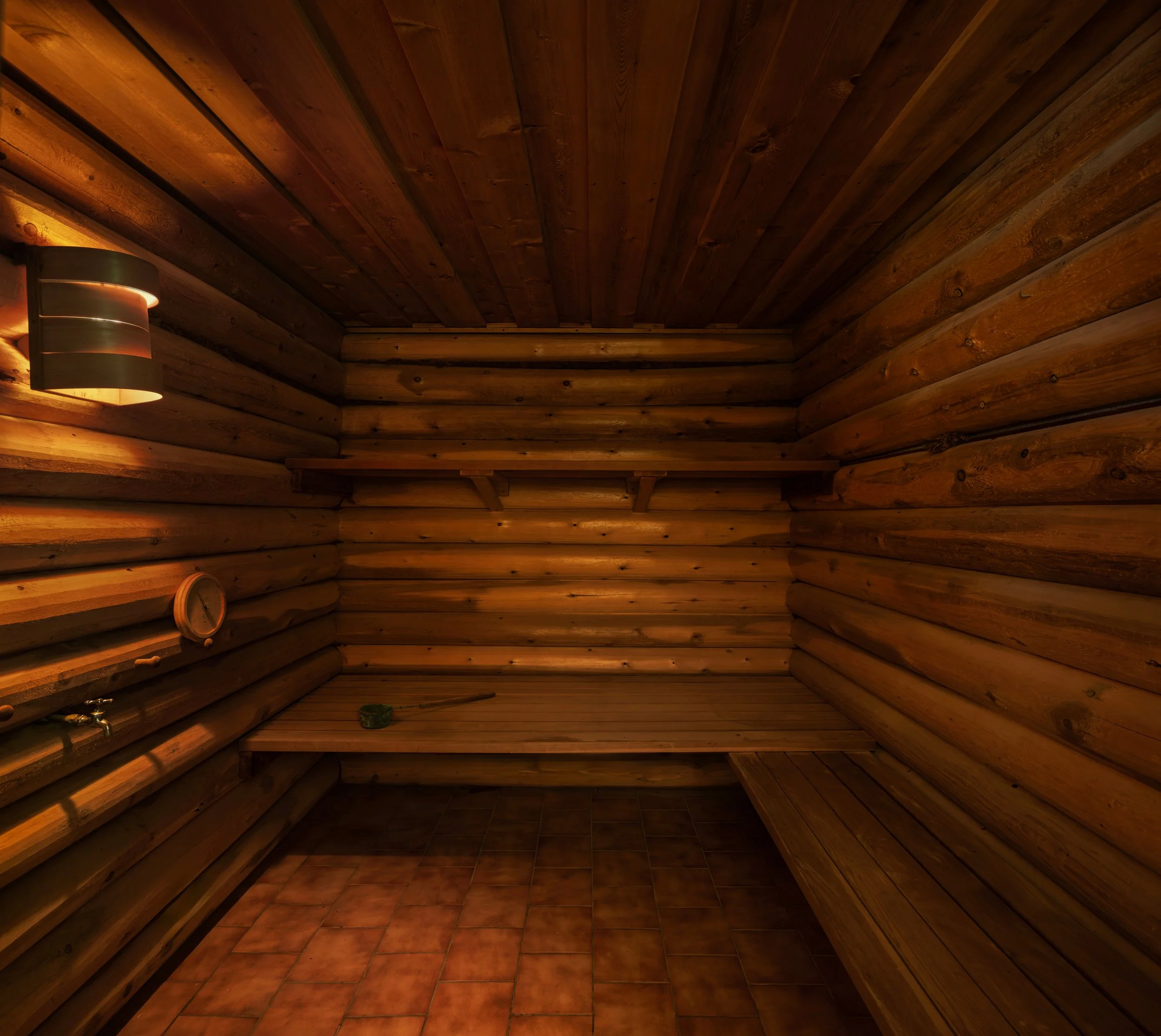
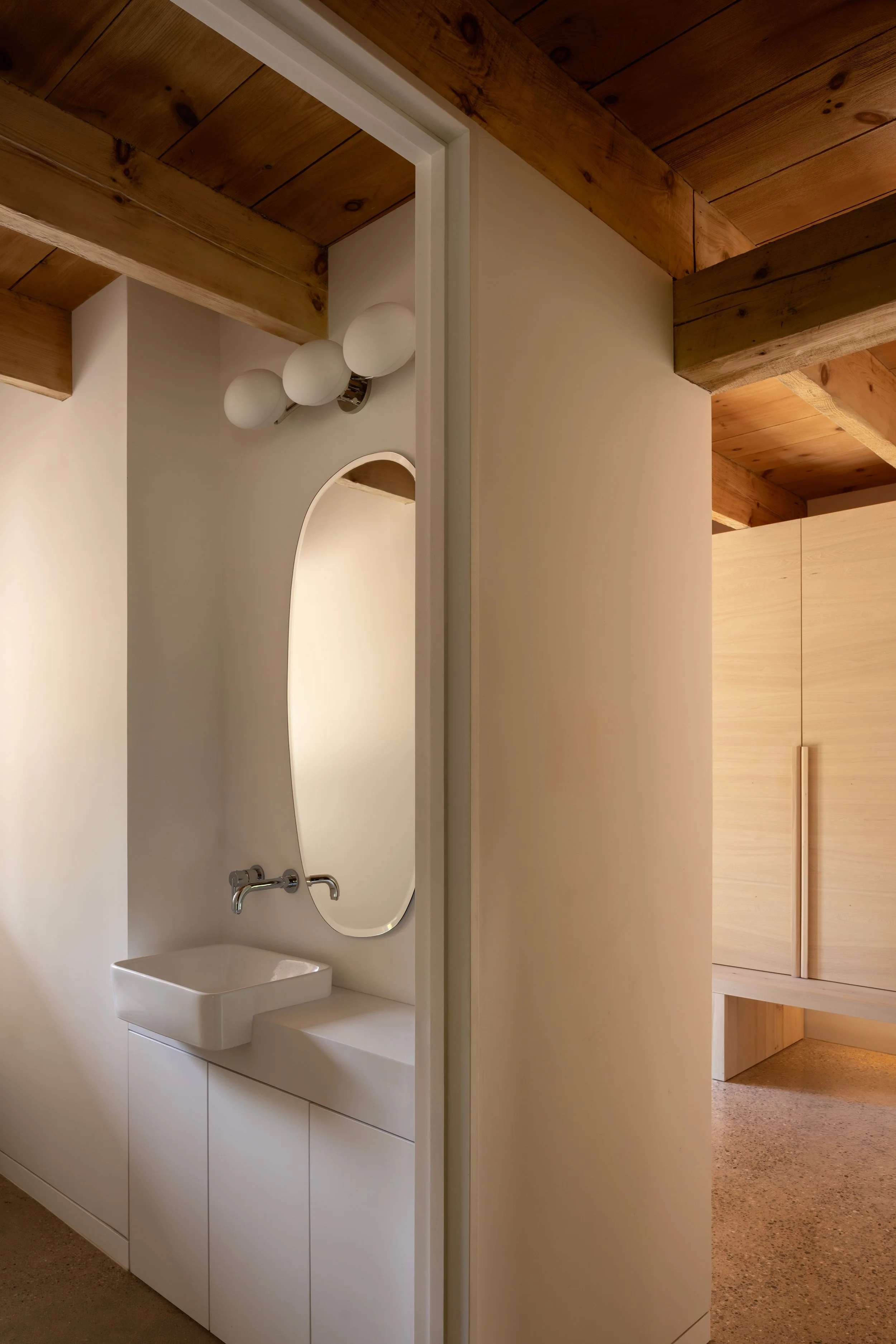
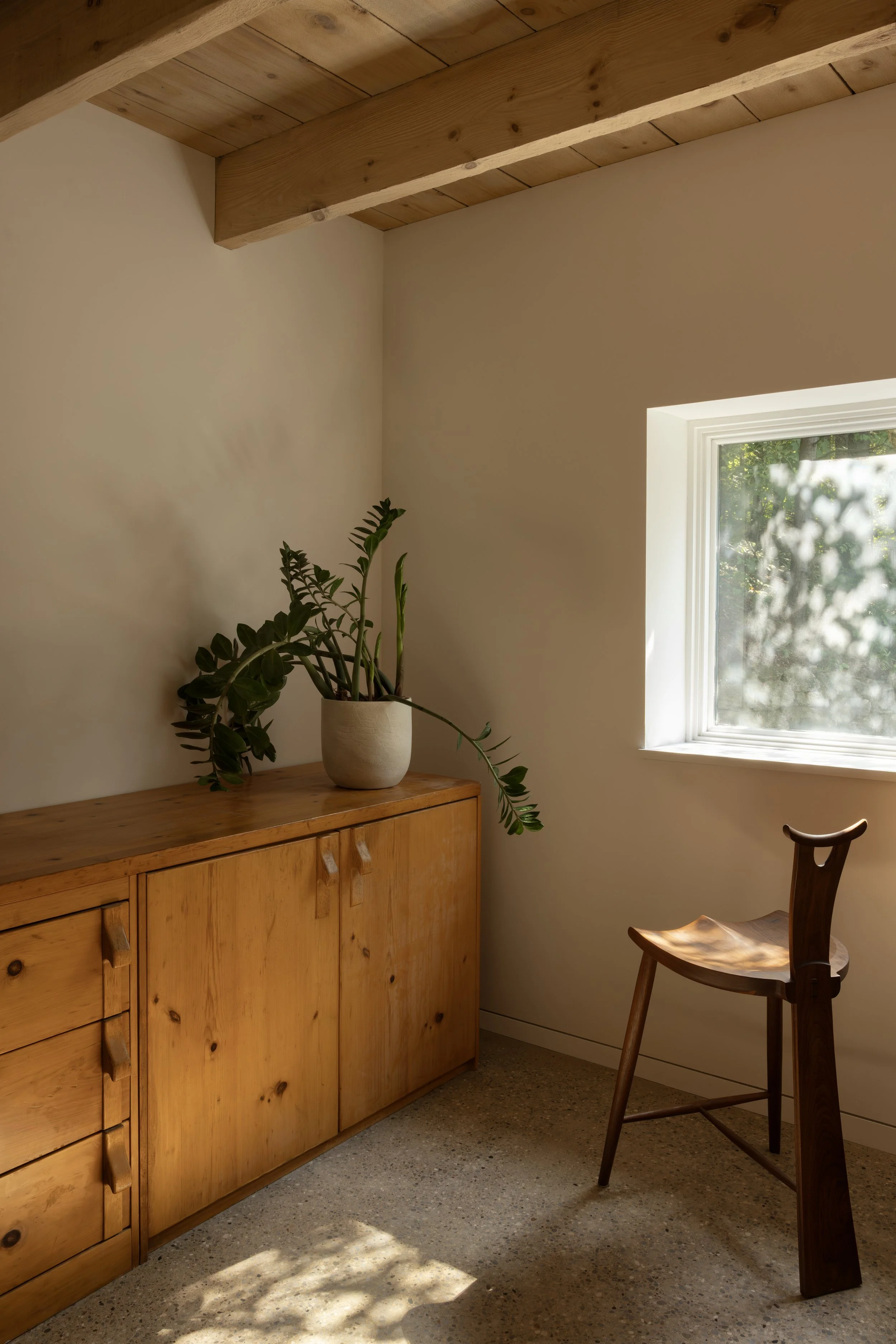
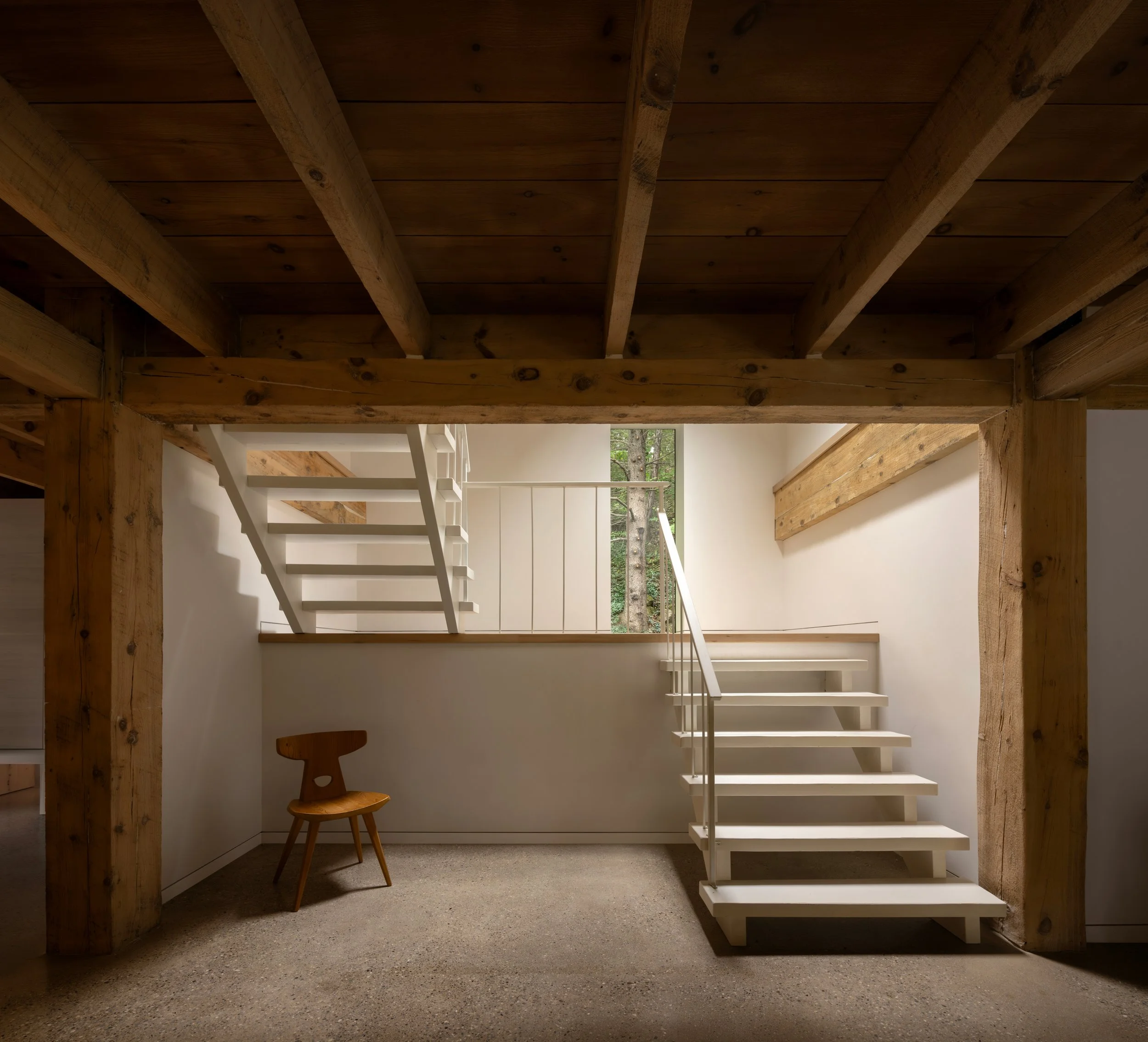
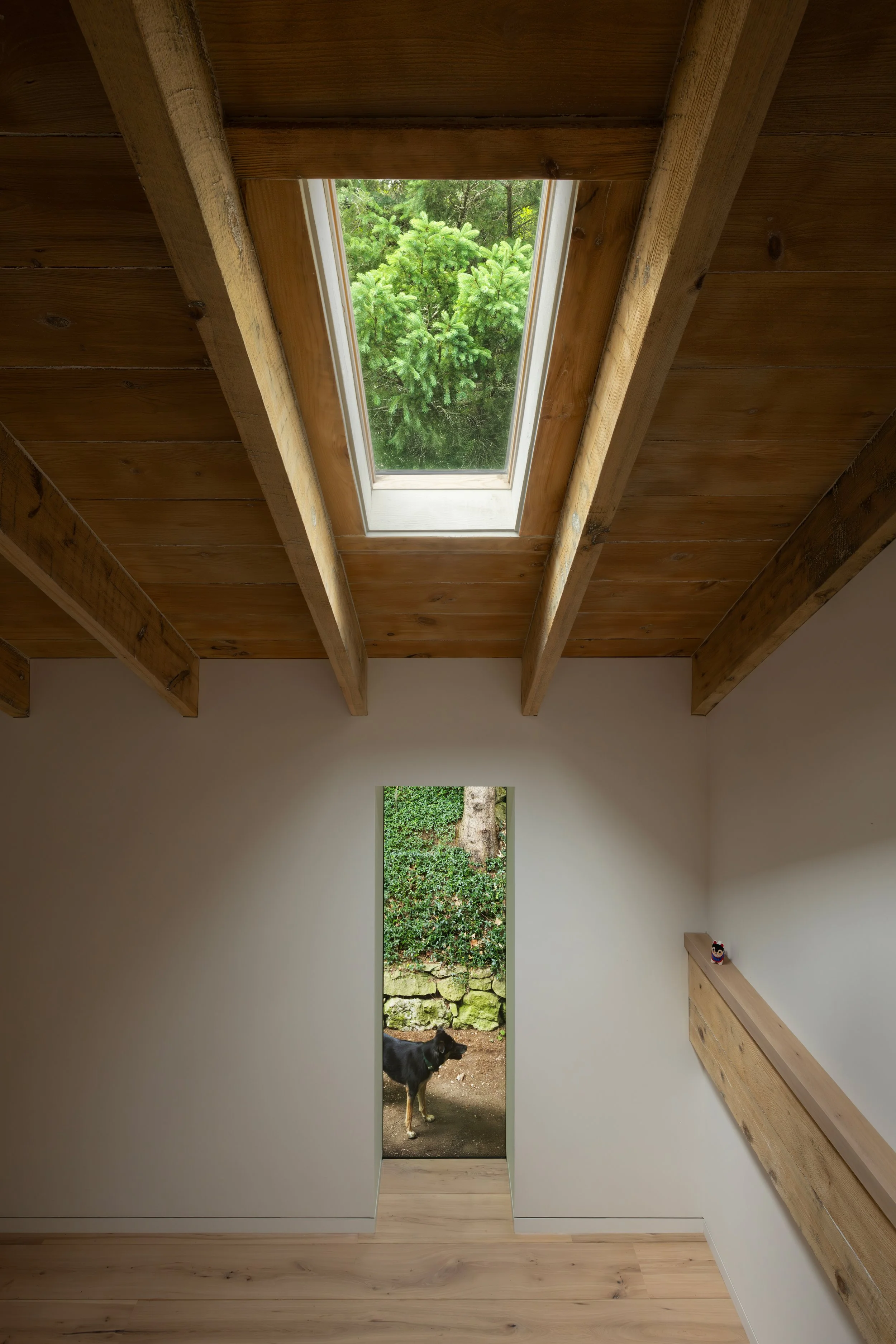
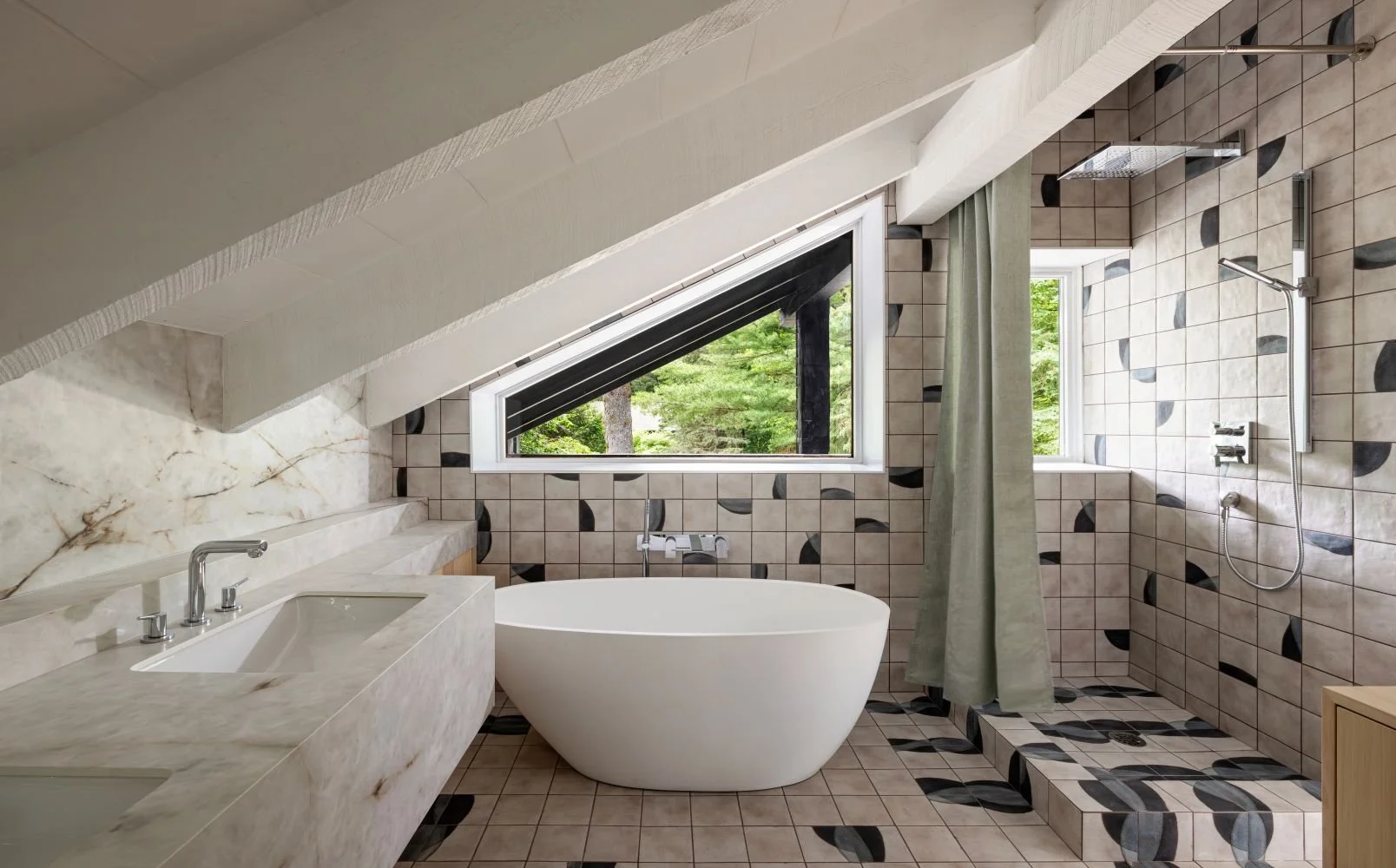
A continuous plane of wood and glazing reinforces the relationship between interior and landscape. Seasonal light, weather, and ambient sound become active elements within the home, while reclaimed elm, local stone, stucco, and radiant concrete floors ground the project materially within its setting. As the sequence descends into the slope, the architecture becomes increasingly embedded within the terrain. Contrasting stair elements—one carved into the hillside and the other suspended lightly above it—frame distinct encounters with the landscape. Lower levels contain spaces for recreation and retreat, including a sauna, gym, pool connection, and a concealed guest suite wrapped in angled polycarbonate that emits a soft lantern-like glow at night.
Designed to support the evolving rhythms of family life, the house allows children to move freely between indoors and outdoors while maintaining visual connections across the site. Durable, tactile materials were selected to weather gracefully and absorb the marks of everyday life, allowing the house to be fully inhabited rather than merely preserved.
Title: Belfountain House
Location: Belfountain, Ontario, Canada
Use: Single Family House
Size: 430 sqm
Number of Stories: 4
Structure: Wood, Steel, Concrete
Construction Period: 2021-2025 Client: Joanie Ellen/Artist; Alex Klein/Philosopher Contractor & Custom Millwork: North Arrow Limited Structural: Moses Structural Engineers MEP: Hayward Consulting & Design Photographer: Ema Peter Photography